







Why More UK Business Owners Are Selling Their Companies To Their Staff
GUEST POST.
The number of UK businesses selling to their employees via an Employee Ownership Trust (EOT) is rising. In 2024, 560 companies made the transition. According to the employee ownership association, there are now around 2,500 employee-owned businesses across the country, employing more than 358,000 people.
For many business owners in Kent, Sussex and beyond, an EOT has become a serious alternative to traditional exit routes, such as a trade sale, private equity or a management buyout.
What is an Employee Ownership Trust?
In an EOT sale, a founder sells the majority of their shares to a trust, which holds them for the employees as beneficiaries. The founder is repaid by the business over time from profits, usually over three to eight years. No employee needs to put their own money in to buy shares. But while they work at the business, the staff benefit from any excess profits generated by the company in the form of a profit share.
The most famous example in the UK is John Lewis. When its employees, known as partners, receive a profit share - that’s the EOT model at work. While John Lewis is the name most people recognise, an EOT is not just a structure for large businesses. It works equally well for SMEs. In fact, most businesses transitioning to employee ownership today are smaller companies.
Why do founders choose to sell to an EOT?
For founders who have spent years building a business, a trade sale can feel like a difficult compromise. Handing the business to a competitor, a private equity firm or an external buyer with very different ideas about how it should be run carries risks. It can impact the culture, the team and the brand they’ve spent years building.
An EOT keeps the business intact and in the hands of the people who know it best. It stays independent and the culture a founder has worked to create has a genuine chance of carrying forward, rather than being absorbed or dismantled by an outside buyer.
There is also a strong financial case. Founders selling to an EOT benefit from 50% Capital Gains Tax relief on the sale proceeds, making it one of the most tax-efficient exit routes available to UK business owners.
For founders thinking about what comes next, Go EO’s free handbook: 10 EOT essentials covers the criteria, considerations and complexities.
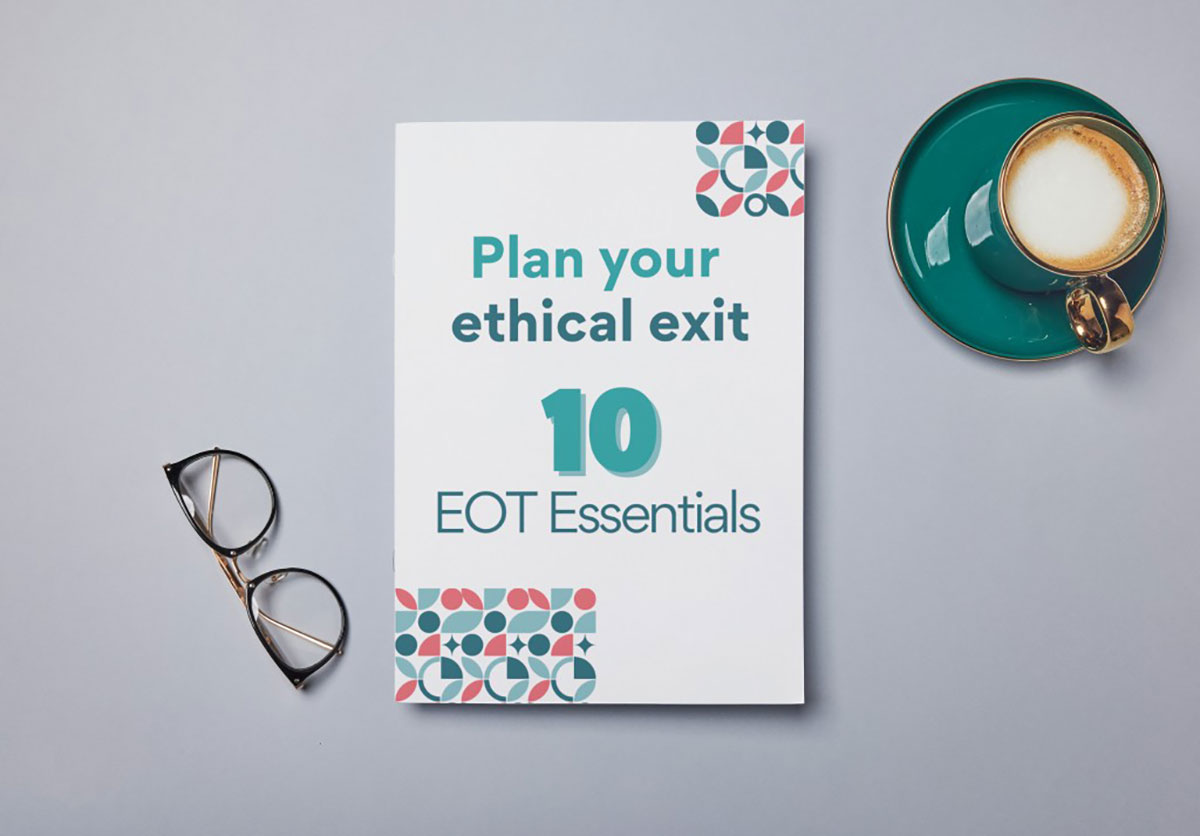
Image Go EO’s free, downloadable handbook guides founders through EOT basics.
What kind of businesses suit an EOT?
Employee Ownership Trusts tend to work well for steady, profitable businesses with a strong team culture. Service-based businesses are particularly common in the sector because much of their value sits in their people, relationships and continuity. Founders who are drawn to the model share some common ground: a desire to look after their team, sustainable profitability and a wish to keep the business independent.
It is not the right answer for every business. Founders need to think carefully about valuation, the long-term payment plan and the fact that those future payments depend on business performance. Go EO's EOT explorer is a practical starting point for any founder who wants to get a clearer sense of whether it’s a viable route for them and their business.
Go EO specialises in EOT transactions for smaller businesses, typically those with a turnover of up to £5 million. They have developed a streamlined, cost-effective process that makes employee ownership a realistic option for businesses that might assume it is out of reach. Go EO works directly with founders and alongside business advisers across the UK.
This is a guest post and therefore these are not necessarily the views of Index Digital.
#EOT #KentBusinessNews #SussexBusinessNews #SellingYourBusiness #IndexDigital