



Train to Spain: A Rail Odyssey Through France, Spain and Portugal
Index Digital’s Stephen Gurney embarks on a one-month journey through France, Spain and Portugal with an Interrail pass.
Images Index Digital
Armed with an Interrail Global Pass (7 days of travel within one month), I set out on a solo journey across Western Europe – through France, into Spain, and finishing in Portugal. This mix of trains and buses gave me a perfect blend of urban energy, coastal serenity and historical immersion.
London to Marseille
The trip began at London St Pancras, with Eurostar whisking me under the Channel to Paris Gare du Nord. To travel with Interrail, you’ll need to buy a pass at the official website and reserve seats in advance – especially for high-speed routes like London–Paris and Paris–Marseille (expect to pay £30 and £15 respectively, see more details on this at the end of the article).
Usually getting to St Pancras can feel a bit like airport queues with long lines of diagonal ropes where you keep seeing the same people while we all zig zag to security. Surprisingly this time it was really quick, and I found myself in the departure room within 10 minutes.
We then sat on the train in St Pancras for a one-hour delay due to "technical problems". Despite the delay, the Eurostar ride was smooth, cutting through the Kent countryside, the tunnel and French Flanders before heading into Paris Gare Du Nord. I was concerned though about my TGV connection to Marseilles the other end having lost an hour.
Paris in Passing: Navigating the Capital
Once in Paris, I made a hurried Metro transfer from Gare du Nord to Gare de Lyon. Tip: pre-check local transfers – it’s less glamorous than it sounds when you’re squeezing through ticket barriers with seconds to spare.
At Gare de Lyon, I hurriedly boarded the TGV to Marseille in the last carriage, I could not get to my allocated seat due to connecting doors being locked, so I spent the four-and-a-half hour journey perched on a stool in the dining car – which is may favorite place for people watching anyway so it was fine.
We travelled through a shifting landscape of wind farms, sun-drenched plains, and medieval villages perched on hills. Southern France grew more Mediterranean the further we went, with drier vegetation and ochre-toned homes, while I watched it all pass by at great speed from my stool!

Marseille: Port of Civilisations
Marseille greeted me at the magnificent Saint-Charles Station. Founded around 600 BC by Greek settlers from Phocaea (in modern-day Turkey), it is the oldest city in France and one of Europe’s oldest continuously inhabited settlements. The Greeks named it Massalia, attracted by its natural harbour.
Over the centuries, Romans, Visigoths, Saracens, and later French monarchs, vied for control of this strategic port. In WWII, Nazi forces forcibly displaced the working from Marseille’s old quarter and deported thousands – including Jews and Roma – to concentration camps. Only 13 of those deported ever returned. Much of the old port was razed in the process, replaced later by some Communist-era concrete structures.

But Marseille has experienced a cultural rebirth – especially after being named European Capital of Culture in 2013. Today’s Marseille boasts revitalised neighbourhoods, art spaces and a diverse population shaped by centuries of migration from North Africa and beyond.
A walking tour with the exuberant guide Ezequiel (an Argentine local) revealed hidden corners and stories of resilience. I left feeling the city’s gritty charm and authentic pulse, far from other over-polished tourist spots.
A few highlights for me that I would recommend are:
- Walk or take a tram to the bohemian neighbourhood of Cours Julien, The Port (Vieux Port) and hike or tram to the wonderful views from Notre-Dame de la Garde.
- Take a two-hour walking tour easily booked online.
- Have dinner in the Old Town just by the old port (Le Panier) and order the bouillabaisse fish stew soup.
Aix-en-Provence: City of Cézanne and Fountains
A short one-hour train journey inland took me to Aix-en-Provence, where painter Paul Cézanne was born and lived much of his life. The town is watched over by the dramatic Montagne Sainte-Victoire, a motif in many of Cézanne’s works.
Aix is a city of water and grace. Its 250 fountains include the moss-covered Fontaine d’Eau Thermale, the elegant Fontaine des Neuf-Canons, and the regal Fontaine du Roi René – though this one only seems to spurt water when it feels like it!
With its broad boulevards, medieval alleyways and shady squares buzzing with café culture, Aix feels both timeless and sophisticated.

Some must-dos:
- Stroll the Cours Mirabeau.
- Sip tea in the gardens of Hôtel de Caumont. Hôtel de Caumont – Art Centre.
- Visit on market day for a full Provençal experience.
- Enjoy just eating and drinking in one of the many beautiful fountain squares.
Then next up on my itinerary was to make my way to Madrid by train, with an overnight stop at Narbonne.
Narbonne: Ancient City on the Canal
Narbonne is a 2,500-year-old city founded by the Romans in 118 BC as Narbo Martius, their first colony in Gaul. It was once a major port until the river silted up. Today, the Canal de la Robine runs through it, and its covered market – Les Halles de Narbonne – offers incredible regional cuisine.
Madrid: Heat, Tapas and History
The fast train from Narbonne to Madrid takes about five hours. I stayed at TOC Hostel Madrid, centrally located and quiet. Although it was a hostel, it suited me okay, but would not necessarily be for everyone. Accommodation in Madrid can be expensive, and the quality of hostels is high.
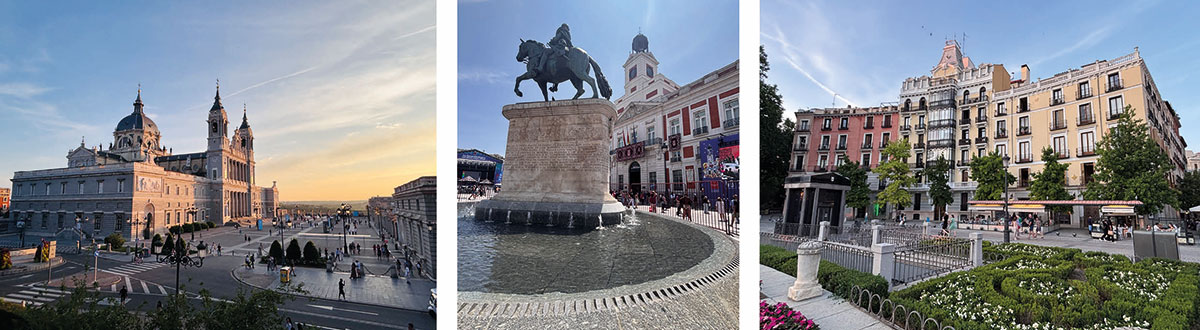
Madrid, Spain’s vibrant capital, pulses with energy, history and art. At its heart lies the grand Plaza Mayor and the majestic Royal Palace, while the nearby Prado Museum houses masterpieces by Goya and Velázquez. Tree-lined boulevards like the Gran Vía offer shopping and nightlife, and El Retiro Park provides a peaceful escape. The city blends old-world charm with modern flair, from traditional tapas bars to avant-garde galleries. Flamenco echoes through intimate venues, and football passion unites locals at the Santiago Bernabéu Stadium. Madrid felt walkable and safe – if sizzling in the summer heat – and was alive with culture.
My highlights included:
- Mercado de San Miguel, a huge iconic food market in the centre of Madrid.
- Teatro Flamenco Madrid (A moody and excellent Flamenco dance show)
- Royal Palace of Madrid
- Spanish Inquisition walking tour (not for the faint hearted!). The Spanish Inquisition, active from 1478 to 1834, remains one of Europe’s darkest chapters. Read more about its history here.
- Tapas and coffee on shaded corners.
The Long Ride to Lisbon
To make my way from Madrid to Lisbon took three trains and about eight hours. The final leg – a slow diesel clunker – offered a glimpse into rural Iberia. Fields, cows and olive groves rolled by, as locals chatted away in a blur of Portuguese.
Arriving at Santa Apolónia station, I used my credit card for the metro to the centre, landing in what felt like a party city of English and American visitors, Lisbon is popular – perhaps too popular in high season – with millions of tourists packing its steep streets and pastel trams. Lisbon, Portugal’s capital and a former seat of one of the world’s largest empires, is layered with history. From the Age of Discovery in the 15th-16th centuries (when Portuguese explorers reached Brazil, India and Africa) to modern multiculturalism, it’s a fascinating city.
I learned from our hotel manager, Manuel, that many immigrants hail from former Portuguese colonies such as Brazil, Angola, Cape Verde and Mozambique – adding to the city's vibrant culture.

Top recommendations:
- Ride the historic Tram 28.
- Walk (or tram) up to the Alfama
- Learn about Portugal’s colonial past at the Museu do Oriente
- Avoid June/July/August if crowds aren’t your thing – April, May, September and October are ideal.
Having done the long journey to Lisbon on the train, I then switched to bus hopping north to Porto with FlixBus (which was very easy to book online, cheap and convenient).
Peniche
One-and-a-half hours north of Lisbon, I stopped in Peniche, a laid-back fishing and surfing town famed for its strong Atlantic waves. While the occasional fish smell reminds you of its industrial side, it’s a fantastic base for cycling, beach strolls and seafood feasting. My next stop one hour north was Nazaré.
YOU MIGHT ALSO LIKE: An Enchanting Railway Adventure Across Java, Indonesia
Nazaré: Giants of the Sea
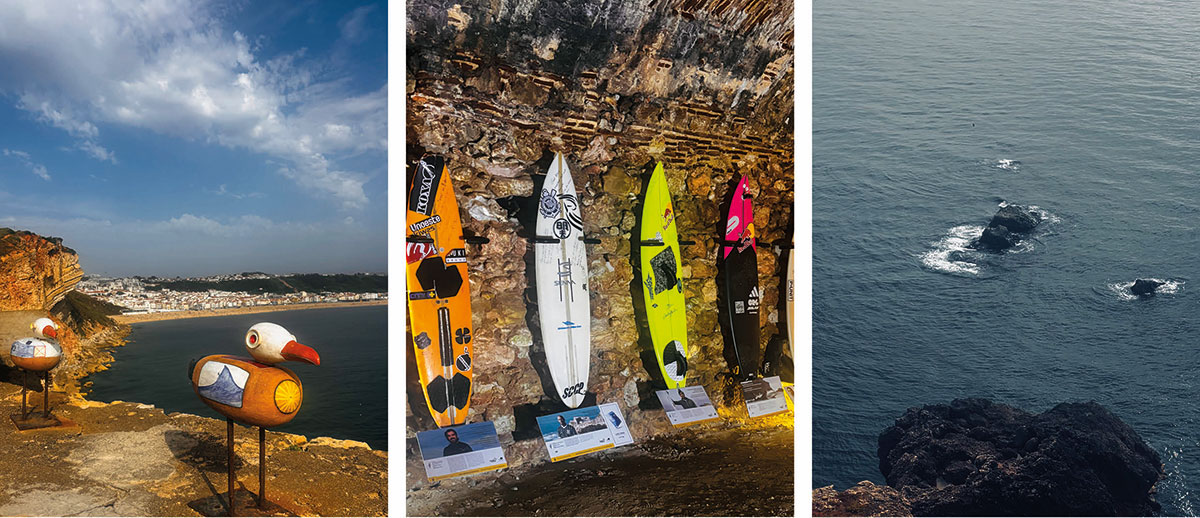
The surf mecca Nazaré beckoned next – home to the world’s biggest waves, some over 30 metres, thanks to a unique undersea canyon. Though the swell was modest in June, the Sitio Clifftop offered jaw-dropping views of the Atlantic and Praia do Norte below. I really like the town, it had a good mix of tourism and local atmosphere with the great food.
Another one-and-a-half hours north, my last stop before Porto was Figueira da Foz – a place that I could only describe as Eastbourne on steroids – quite big and seemingly disjointed. The people I met were very friendly so to understand it properly I would need more than one night there. Most of this trip is based on first impressions – and my final half day in the city of Porto was no different.
Porto is a coastal city in Northwest Portugal separated by the Douro River. It’s known for its stately bridges and port wine production. The Ribeira district down by the Douro River is a must-visit for its cobbled streets, colourful merchant houses and cafe society enjoying people watching and casual conversations with friends.
Right now (the end of June) it’s busy and the city seems a bit of a building site with construction going on everywhere. I visited the Mercado Time Out, marvelled at the São Bento railway station with its stunning azulejo tile murals, and wandered the historic Ribeira district.

Reflections on the tracks
Travelling solo can be an emotional rollercoaster. There are moments you question the journey – especially when tired, lost or lonely. But then come those sublime moments: a smile from a stranger, an unexpected view, or the peaceful rhythm of a train crossing open country.
I like to think of myself as a Paul Theroux-type traveller, notebook in hand at a dusty café. But the reality is usually more chaotic, hustling through stations, living out of a backpack, missing trains. Still, the call of the road never quite fades.
This wasn’t just a journey across countries, but across time, culture and history – one train stop at a time.
Details: If you do decide on using interail you can go to their official website and firsly pick the type of Global package you would like. For this trip i chose 7 days travel in one month. Once you have paid and downloaded the app, you then have 9 months to do the trip and the day you start your first journey you then have one month to use your 7 days (they can be any indivudual 7 days you choose over the month). Its very straighforward once you have the app and you can start to plan your journeys. On each leg of the trip the app will tell you which supplements and trains you need (Eurostar to Paris around £30 extra or Parise to Marseille £10. You can usually also book these reservations through the Interail app.
Tips: I tend to use the 7 travel days as quite long travel days and then stop for a few days.
I also have a rough destination in my plan and book trains day by day. That suits me. I also book accommodation mainly through booking.com once I am on the train. (not advisable probably in high season) You can pre-plan the whole trip as well of course depends on your preference.
For more details on adventure train trips (ie london to Istanbul) I also follow the man in Seat 61 who is much more specific and helpful and can be found on Google.
#RailTravel #TravelInspiration #IndexDigital