



Why Visit The Dominican Republic In The Caribbean?
My name is Stephen and I am the publisher of this website, a part-time traveller and writer of these articles. I previously published the Index Magazines, which were established in 1994, and now (mainly due to Covid) we are online only.
Writing is not my trained profession but this is an honest attempt to paint a picture of some of the places I have visited and the whys and therefores of the Dominican Republic – including great links and tips at the end of the article if you want to visit.
Having spent most of November and December at home I finally boarded a plane to the Dominican Republic for a month’s travel.
Why did I choose the Dominican Republic? Well, it looked interesting and diverse and had easy access during these Covid times – with no test required, just proof of vaccination – and my buddy Trevor Fitzgerald joined me for the first week to experience a unique island.

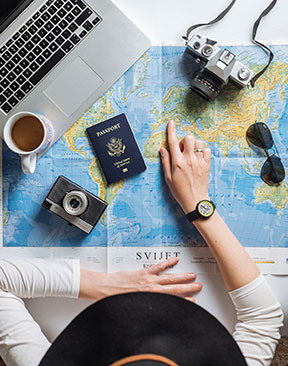
Map thanks to Debbie Brown for the great Map.
Day one was a test of all the senses, from the moment the plane touched down in the beautifully warm air. We decided to hire a car (decision-making not being either of our strong points!) and although the roads around the airport are very good, we soon found ourselves lost and driving down some unbelievable tracks to our first hostel at Macao Beach... It turns out my map reading was as random as Trevor’s pothole negotiations!
It seems there are a few choices of the way to see the Dominican Republic (we will call it DM). I suspect a lot of the people on the plane were taking the first choice of going straight to one of the many all-inclusive resorts at Punta Cana or Bavaro resort – 25 kilometres of mainly all-inclusive hotels near the airport – then sitting there enjoying the sun, before flying home again without ever seeing the real country.
Trevor and I had chosen the second path (which was slightly more challenging for two older travellers bereft of the ability to make any decisions) to try to see and experience the countryside and local people.
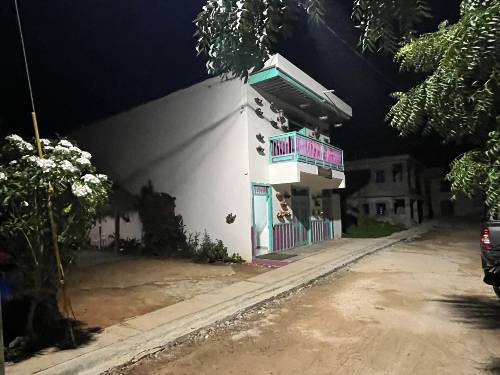
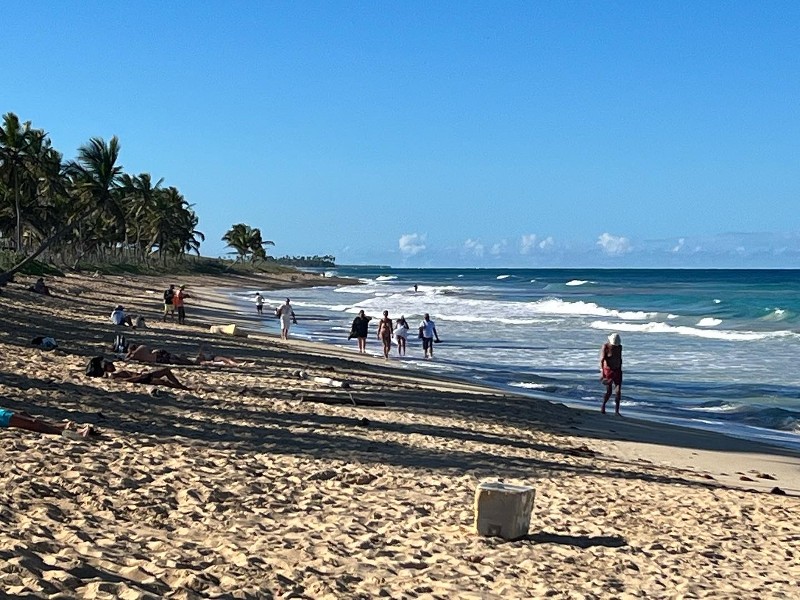
On this first day we headed to Macau Beach, 30 kilometres due west of Punta Cana Airport and the last bit of the region of Punta Cana. We chose this as our first stop having booked Johnnies place via booking.com.
Playa Macao is in the region of La Altagracia and is very popular among locals and visitors as it is one of the only spots in Punta Cana not surrounded by large all-inclusive hotels. The beach has crystal white sands, clear waters and is the best spot for surfing, with a definite surf vibe.
Join us for great weekly offers, discounts and local stories
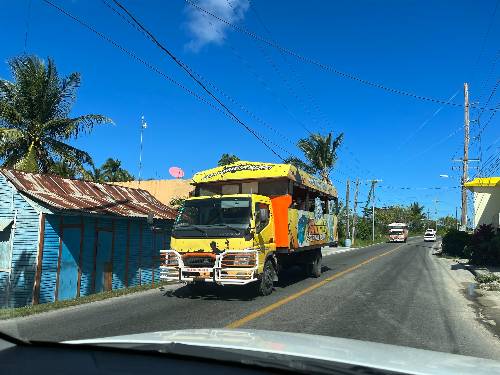
The small hotel we stayed in behind the beach was distinctly local with only the odd traveller around waiting to catch the local bus or Guagua. We were quickly eating the local dish on the side of the road, made by our lovely hostel Johnnies, which is run by a great guy who spoke with us via the mobile translation app. The warmth of the night air was a lovely change to cold grey winter in England. We seemed a bit of a novelty as people sped by on their motor bikes, horses, flash four-wheel drives and all types of other weird transportation. The atmosphere was crazy and busy and the people seemed genuinely friendly.
Within a few hours we had met many people and Trevor was carted off by motorbike by the super friendly Raphael to collect the local rum! So the adventure has begun… A stunning beach only 10 minute’s walk away and prices per night of £20, which was great value.
Day one disaster: I managed to go flying over some rocks in the road and badly grazed my knee which put paid to any sea swimming for at least a week. Trevor and I also got lost in a swamp having taken the wrong turn and nearly didn’t make it back!
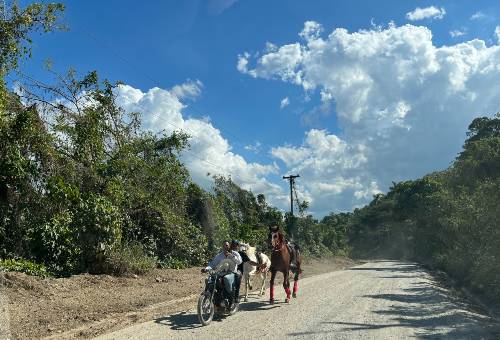
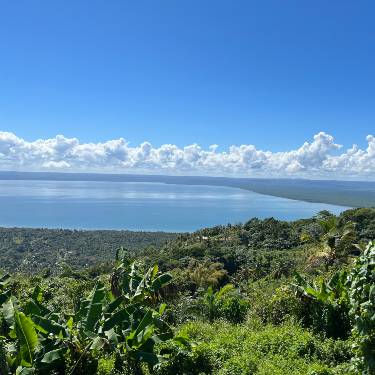
Next we headed to the west, to a place called Samana Bay, which is a beautiful bay full of migrating whales between January and March. Sabana Port itself is a small bustling urban town with 10,000 residents in the Hato Mayor province with the ferry port to Samana on the opposite side of Samana Bay. There are about three ferries per day depending on the weather.
The town itself is well known as the birthplace of Senotita Elupina Cordero, who became blind at a very young age and developed a mystical and religious personality. She was known as somebody who could cure many illnesses – so people came from all over to be cured by her. There is a chapel also in her name that attracts visitors from all over the world.
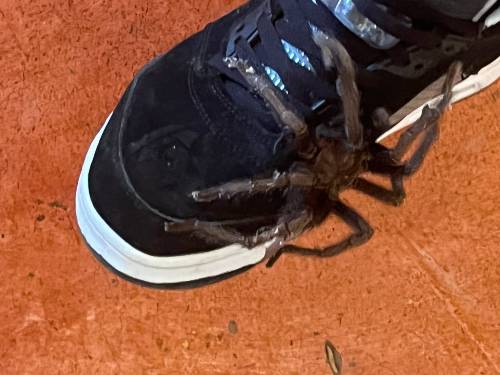
We stayed for two nights at a great place by the name of Altos De Cano Hondo, 15 minutes’ drive from Sabana along dirt tracks. It is a multi-level stone hotel seemingly built into the rocks with rock pools to swim in. It is located up in the hills in the nature reserve of Los Haitise. So far we have met large cockroaches, massive eagles, wild pigs, horses and a huge tarantula!!
When I go back (as I definitely plan to do) I will hire a guide to walk through the nature reserve and get a boat to go the caves, but I wouldn’t bother with Bacardi Island (for reasons I will explain later). There are beautiful views down to Samana Bay from my room and watching the many eagles floating above is a surreal experience.

We made the error of booking a touristy trip to the whales and Bacardi Island, which looked idyllic. The whales were great and there were lots of them, but the island was way more touristy than expected and full of pushy trinket sales people who were hard to shake off. So be aware if you go there (of course some people may like that sort of thing). It’s still a buzzy, beautiful place, you just need to avoid eye contact with the sales people unless you want to buy something at over inflated prices.
After a few nights in this beautiful area, we headed south via Higuey, the capital city of the eastern province of the Dominican Republic. We stopped to visit the Basilica of La Altagracia – a huge Cathedral in the middle of the city that you can see from all points driving in.
It was a highly interesting drive though the city of Higuey. If you hire a car the towns and cities are not for the faint hearted, buses, cars and many, many mopeds coming from all directions!! – but you have to stand your ground. The city is lively and hot but well worth a visit for the museums, the Cathedral and atmosphere.
YOU MIGHT ALSO LIKE: Travel blog
La Romana is on the south east coast and a gateway to many resorts like Punta Cana and Bayahibe. We spent one Sunday night there, and while the town has mainly rough stony roads and a distinctly local feel, the beach was beautiful. Because it was a Sunday, the locals were out in all the restaurants, so there was a real noisy local atmosphere with Caribbean music blasting out from all the bars and eateries. Probably for local atmosphere it was the best experience so far, but again may not be for everyone.
Having dropped Trevor off at the airport after a frantic but fun week I met friend number two Mick from England, who had also come to visit the island. We set off for Loss Terranas on the other side of Samana Bay located in the Samana Peninsular.
This is one of the most beautiful areas of DM and was established in 1946 when the then president ordered the rural inhabitants of Santa Domingo to resettle there as farmers and fishermen. Las Terranas is mainly known for its beautiful beaches, scenery, food and being a very safe place to stay.
Unfortunately, the weather was torrential rain for two days, where I also managed to fall down another large ditch in the rain leaving my leg looking like a war zone! so we decided to relocate to the South East town of Bayahibe.
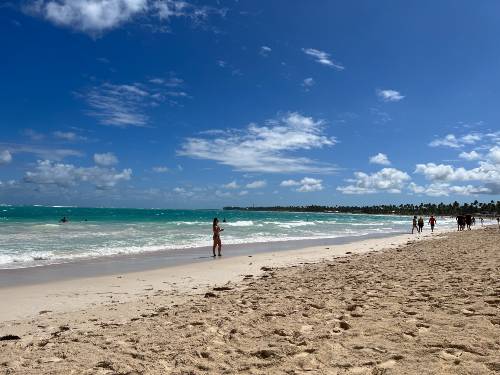
Due east of La Romana and nearer Punta Cana we spend a few days at Bayahibe. This had a beautiful beach area with many yachts moored up and it appeared to have the best dive centre with the beautiful island of Saona nearby which is part of the East National Park. We decided to leave the island alone after 100s of tourist boats were spotted heading out there in the morning and it appeared to be like Bacardi Island.
Again, the area was made up of very nice safe-feeling local areas, mixed in with tourists and divers. It had a really relaxed, happy atmosphere, busy but not as mad as La Romana. The beaches are either side of the town of Bayahibe. One is a long main beach mainly inhabited by Dominicans, the other a tiny beach mainly with holiday-makers.

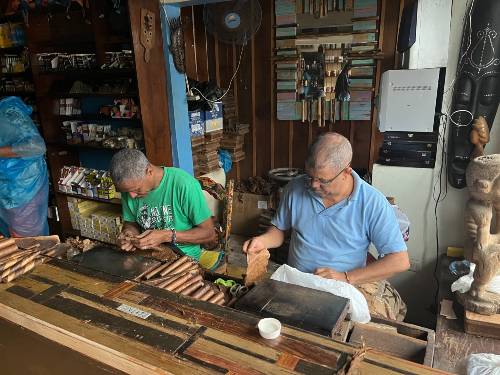
After a few great days in Bayahibe, I headed back to Punta Cana for a few days.
Punta Cana is the area most tourists go to, as it is the main all-inclusive resort area of which Macao is at the northern end. The travellers we met round the island were quite snobby about Punta Cana as the tourists fly in, stay all-inclusive and don’t really see the country.
However, the area I stayed for a few days is called El Cortado, Punta Cana and it is in fact very lively area with lots of cafes, bars, restaurants and quite a few travellers. One good thing about this area is that everything is in easy walking distance. I did feel that there were a lot of locals hassling tourists for all sorts, especially taxis.
Some of the single female travellers were quite intimidated by the harassment and in some cases the local men were very blunt with them. So if you are a solo female be prepared for some harassment but not any danger as far as I could see.
There is lots of fun to be had negotiating for taxis, but you must be firm about the price you feel is fair.
I then took the bus from Punta Cana to Santa Domingo (Bavaro express) which takes 3-3.5 hours once the driver has stopped at many places.
Arrival in the city is through the bustling and frantic suburbs, and it appears the city is split roughly into three parts. 1: The suburbs which we were advised to avoid; 2: The main city and port; and 3: The colonial area which was accessed through the old fort walls.
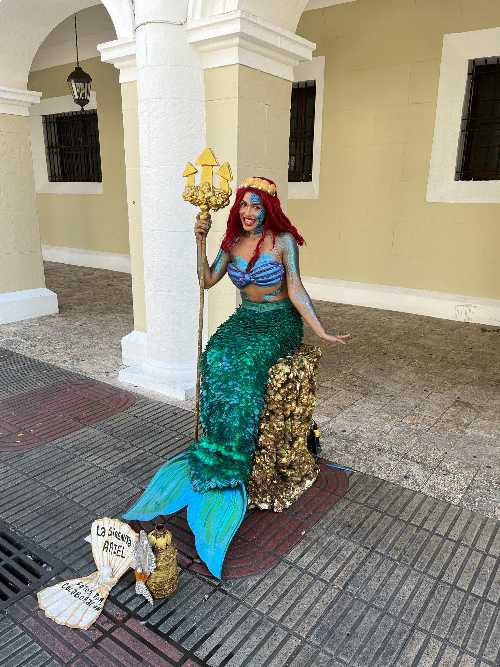


The capital city of the Dominican Republic was founded in 1496 with the arrival of Italian exporter Christopher Columbus in 1492 and became a Spanish enclave officially from 1498. This is the largest city in the Caribbean with a population of three million.
The city itself was pretty frantic and the walk from the bus station to the colonial area was about half an hour, but it felt pretty safe and very interesting.
As soon as I walked through the walls to the colonial area (Zona Colonial) the entire atmosphere changed to being a lot quieter with much older and more old world buildings. This area included most of the museums and statues, including the Alćazar de Colòn, Fotaleza Ozama, Cathedral de Santa Maria La Menor and The Christopher Columbus Museum among many others.
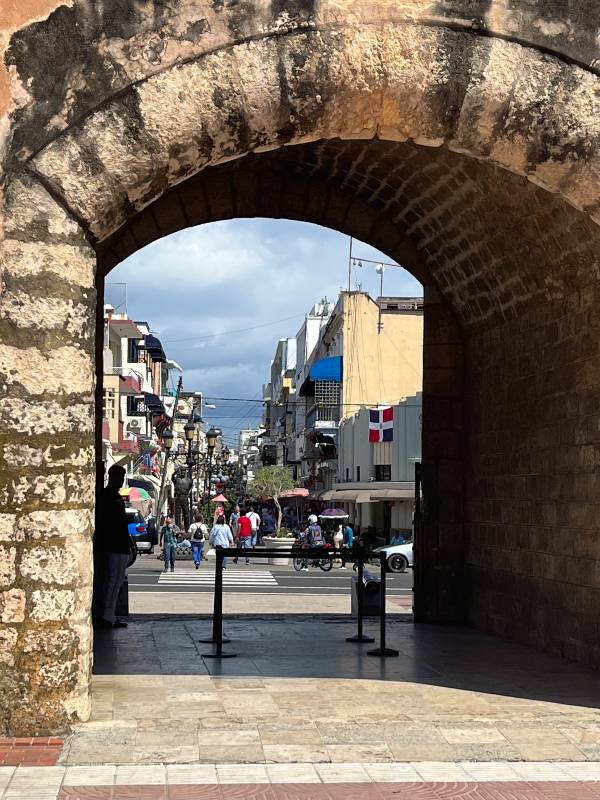
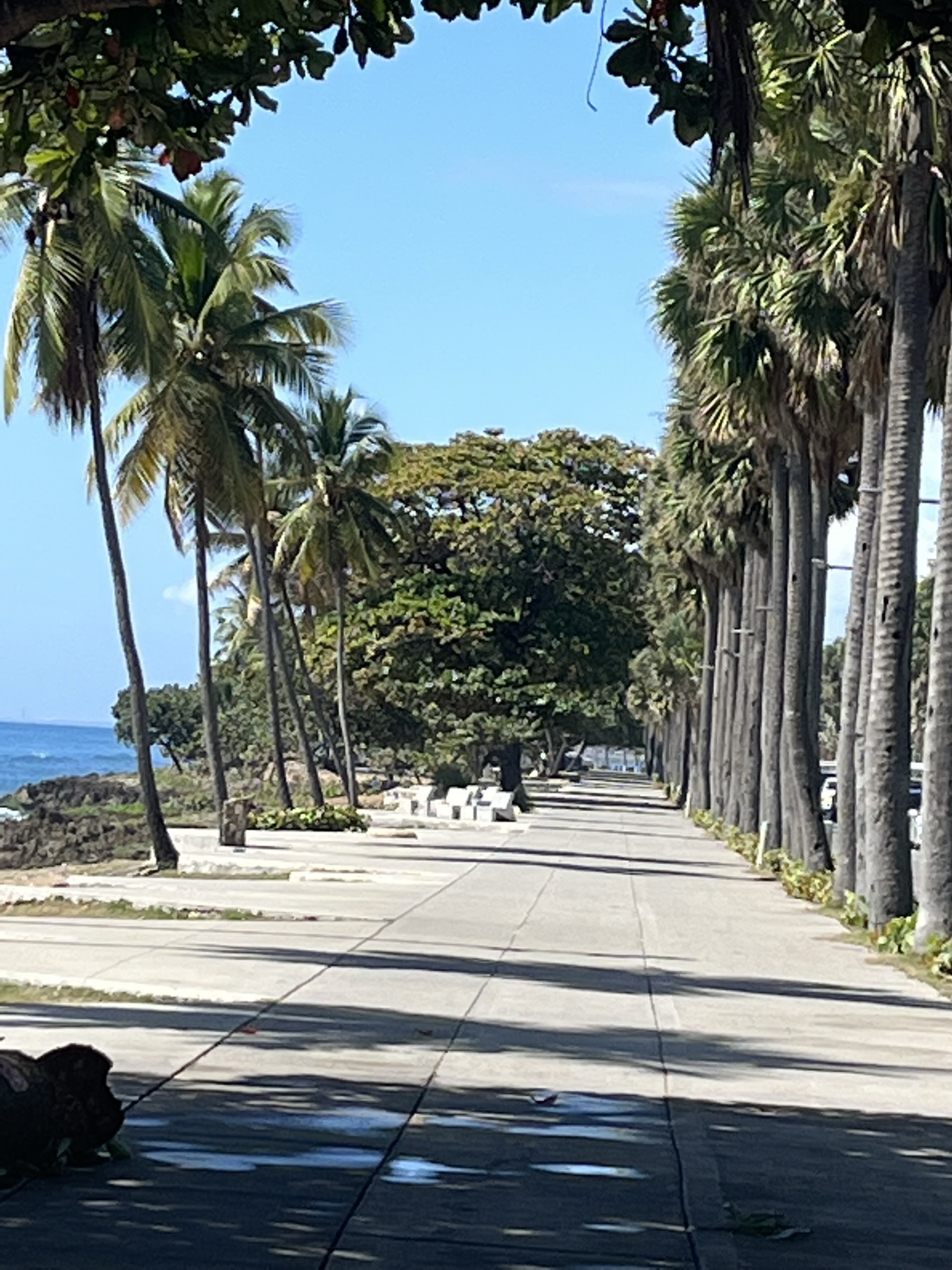

Its quite touristy and quite like many Spanish old towns such as Santiago, Madrid, or Valencia, but had a great vibe and would warrant a stay of at least one to two nights in some of the great hotels within the walls of the colonial section.
When I return to DM I will get the bus to the city Santa Dominica and stay for three days and visit the south west of the Dominican Republic as the people there are supposed to be much more laid back and it’s another beautiful area. Then bus to Cabarete to visit the bird forest and the water sports mecca followed by getting a bus to Los Terranes to explore that area in more detail in better weather.
Overall it is a fantastic country. It was slightly edgy as we are visiting an essentially poor country and we are viewed as very well off, but generally the people are really nice and everyone says hello as you walk by, unlike many places in the UK!
So some tips…
- Always negotiate with taxis before you get in as they will invariably try to charge you more, or alternatively book through the hotel. The really useful Uber seems popular here and much cheaper generally with no negotiation required.
- If you hire a car, download maps.me – it is an offline app for great navigation around the island and saves a lot of time with data roaming. The main roads and motorways are very good but the off roads not so good with many speed bumps and holes in the road to a varying degree.
- The buses from the main areas are great, so if you are using the buses, the bus stations are easy to find and the best value is to use Uber to get the station. The bus from Punta Cana to Santa Domingo costs around $7-$14.
- Visit Santo Domingo, but avoid driving there if you can.
- Learn a few Spanish phrases as you go, I found the app Duo Lingo brilliant and the Google translation app which is really useful for conversations at hotels, etc.
- Be aware of your surroundings without being too nervous. The Dominican Republic is generally very safe, but like most countries some areas around the cities (especially the suburbs) care needs to be taken or just avoided.
- On the motorways, stick to the speed limit – there are a lot of hand-operated speed cameras.
- Before you go, take dollars with you and exchange for the local currency when you arrive.
- Direct flights with Tui were very good.
It is a fantastic country and well worth a visit with all the changing and beautiful landcsapes – and try to see more than just the all-inclusive!
Pictures by IndexDigital
#DominicanRepublic #TravelBlog #IndexDigital