







An Enchanting Railway Adventure Across Java, Indonesia
Index Digital’s Stephen Gurney experiences the delights of Southeast Asia and Oceania in part one of his latest travels.
Images Index Digital

For my latest adventure I decided to explore rail travel from Indonesia’s Jakarta across to Surabaya in the East, discovering its hidden treasures along the way, before hopping on a ferry to my final destination (for now!) of Bali.
But in order to start my adventure I had to get to the country first – it’s a long flight to Indonesia, taking a minimum of 16 hours with one stop at Dubai, but this was a trip I was really looking forward to once I landed.
Located between the Pacific and Indian oceans, the Republic of Indonesia is made up of more than 17,000 islands. My first stop was to visit the country’s capital city Jakarta, which is located on the island of Java. The economic, political and cultural centre of the country, here you will find a real mix of cultures which is displayed in its diverse range of architecture, cuisine and language.
I had heard reports of Jakarta being a sprawling metropolis of 11 million people and not really worth visiting, but how wrong those people were. It may be the second largest urban area in the world, but that doesn’t mean there aren’t treasures to be found.
However, the first thing that strikes you is how cheap it is there. My hour-long taxi ride to my hotel in the central Menteng area was just £9 or 180,000 Indonesian Rupiahs. I withdrew £180 in the Uk which instantly made me a millionare in Java at 3.6 Million IDR!(Indonsian Rupiahs)
The city is full of traffic, noisy and has smog, but get the ever helpful Google out and it becomes apparent there are many great things to do here. Outside of my hotel I met Kandi who became my unofficial guide for two days, helping me find the best spots in Jakarta in exchange for speaking English with me and a few meals provided.
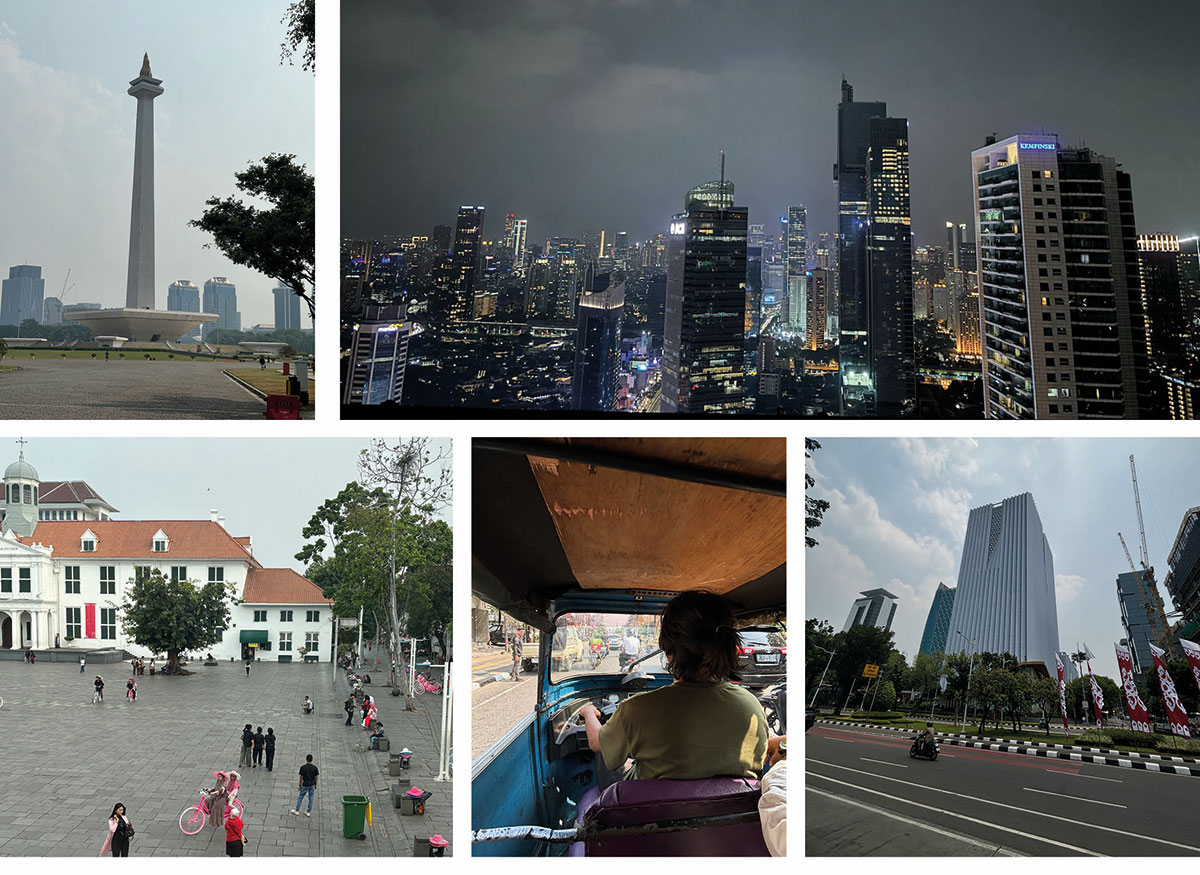
He showed me how to manage the local transport system of Tuk Tuks (Bajaj), local small buses (Mikrotrans) and Transline buses, with a simple card meaning the very cheap cost of £2.50 for three journeys anywhere. My favourite form of transport was the Tuk Tuks as they can skip around traffic easily and you really feel part of the Asian vibe – however it may not be for the faint hearted! A top tip is always ask the price first. There is also the taxi hailing app Grab which was very good and Sunbird Taxis are everywhere.
Jakarta is a must-visit city for the people you will meet there, the Dutch colonial history and buildings, the incredible sky scrapers and the vibe.
Here are my recommendations of some places to visit:
- Stay in the Menteng and Thamrin area of the city as it’s very central and there’s lots of great hotels. I stayed at the Stanley Wahid which I found on booking.com – it is a mid-range hotel at £40 per night and was perfect for my needs.
- Morning coffee at the Regency Hyatt, just a 20-minute walk away and the best hotel in the area.
Kandi and I visited the National Monument (Monas), which is a 132m obelisk in the centre of Merdeka Square, Central Jakarta. It is the national monument (and museum) of the Republic of Indonesia, built to commemorate the struggle for Indonesian independence. Here you get fantastic views of the city and a very good potted history of Java with its many occupations: Dutch, Japanese, Chinese, Hinduism, Islam and the 1945 struggle for independence.
Before 1945 Jakarta was named Batavia – and so we visited the famous Batavia cafe in the Dutch Colonial square for a very elegant coffee and cake.

One thing I must add here is the striking friendliness and kindness of the people. I even found I was a bit of a celebrity at the tower – being English everyone wants to say hello. This politeness is instilled in children from early school age, so it is found all over Indonesia. A wander through China town is a must to see the myriad of Chinese medicine stores, street food restaurants, and many shops and cafes.
The first part of my train trip was from Jakarta to Yogyakarta in Central Java. Tickets can be found online or direct at Gambir train station. If you cannot buy tickets online it’s probably wise to go to Gambir station the day before to buy your ticket. The train to Yogyakarta costs 720,000 Indonesian rupiahs (£36) and takes about six hours.
Gambir station in Jakarta is clean and efficient with lots of great cafes. Our train arrived exactly on time and the noticeable difference with European trains is that the driver is dressed like a pilot and the waitresses appear to have come straight from Indonesian Airways.
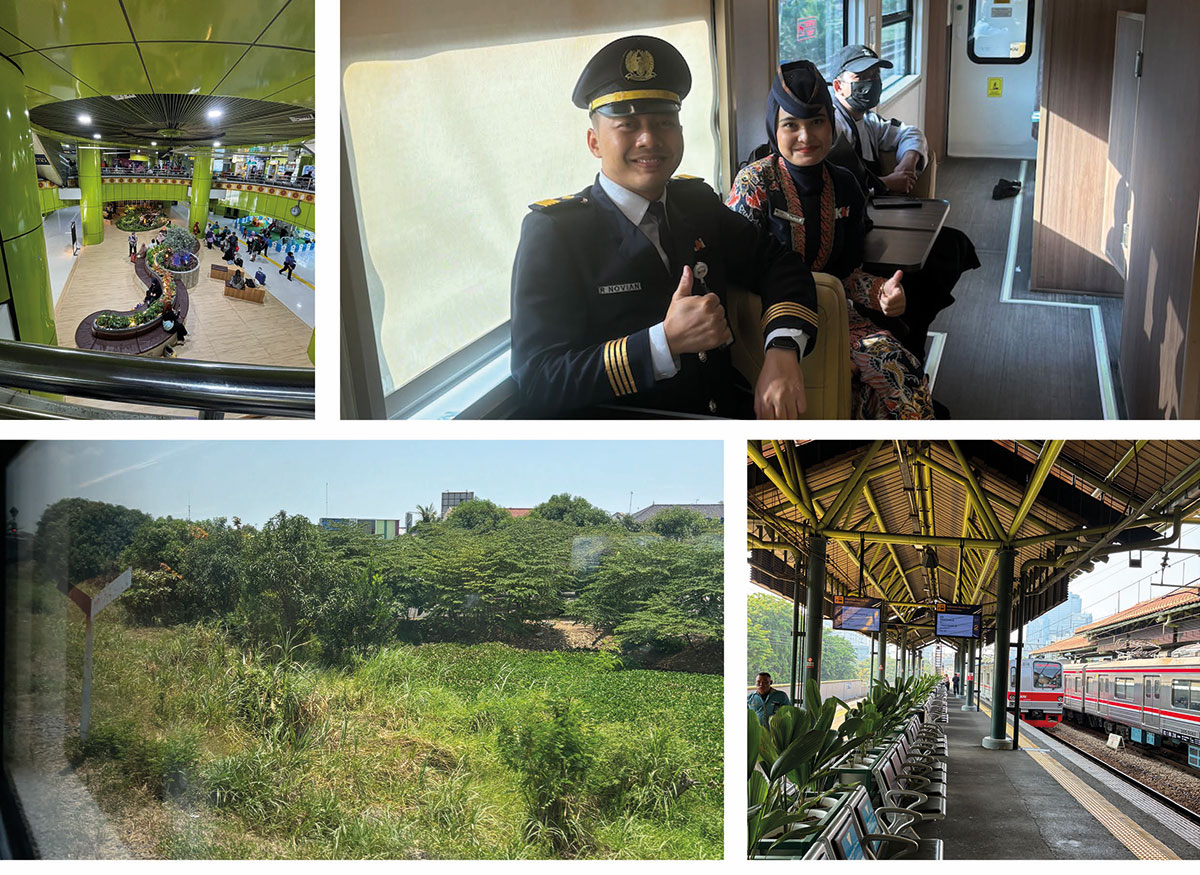
We trundle off though the huge suburbs of Jakarta at a solid pace to finally find rice fields with workers and stalks watching them, lush tropical vegetation, villages and towns with thousands of moped drivers going about their business. There are palm trees, forests, mountain ranges, rivers and lots of farms with rice, corn, goats and sheep.
It’s not a lonely trip as everybody chats and they are incredibly polite and humble. It seems not too many western tourists have explored this part of Java so we are still a bit of a curiosity. I feel relaxed and it seems a happy train – maybe we can indeed learn from this?
In Yogyakarta I opted for a bit of luxury – at £58 a night I stayed at the wonderful Phoenix Hotel (which I also found through booking.com) that was located a 15-minute walk north of the station. I choose to walk as much as possible but alternately you could grab a taxi which would cost around £2.
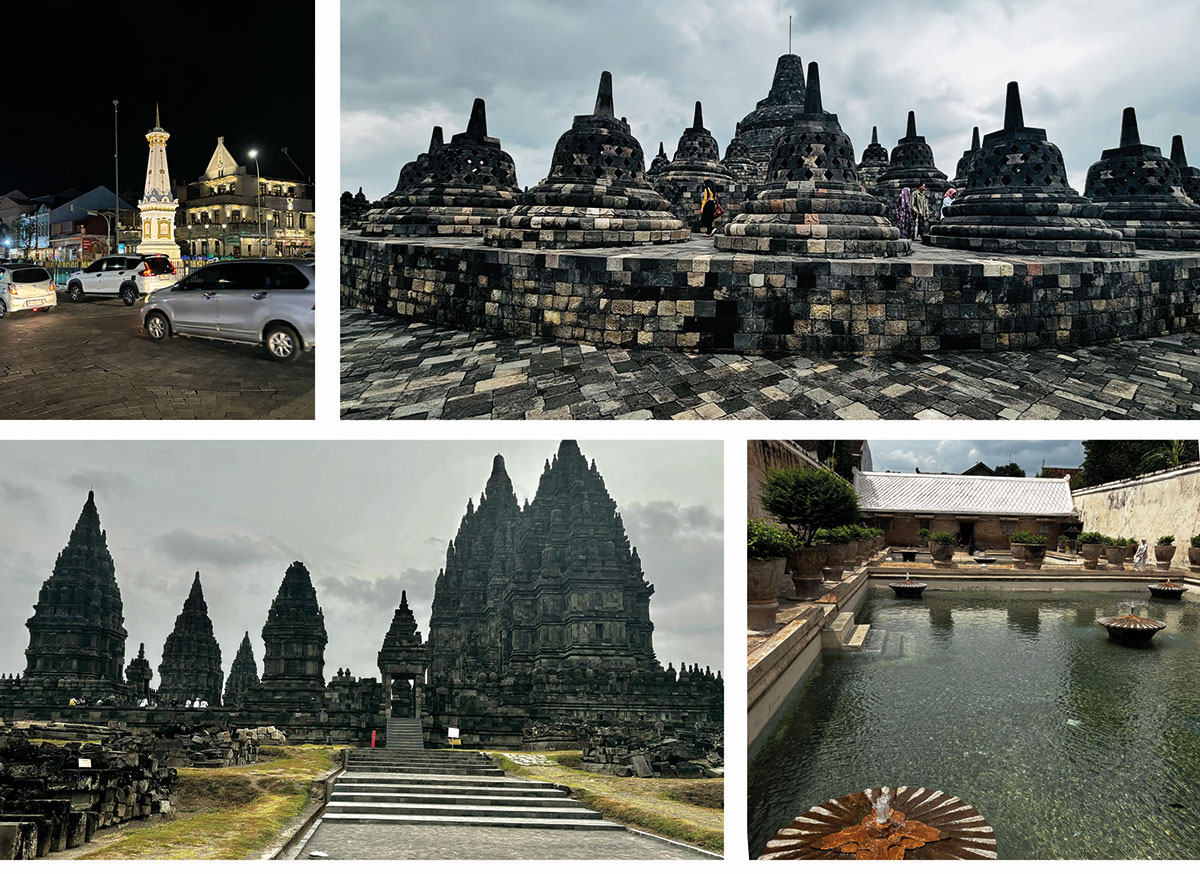
Yogyakarta, or ‘Jokja’ as the locals call it, is situated in central Java and is considered the city of arts and culture, as it is the only Indonesian royal city that is still ruled by a monarchy. It had previously been the capital of Indonesia between 1946-48, during the Indonesian National Revolution.
It has the famous Malioboro street (a major shopping street) leading from the train station south with its many festivals and is full of life. It leads to the Kraton area where you will find the Sultan’s Palace and Water Castle, well worth the visit.
As well as to experience the delights of the city, many people come for the famous temples of Borobudur (a Buddhist temple and previously one of the Seven Wonders of the World) and Prambanan, a Hindu temple.
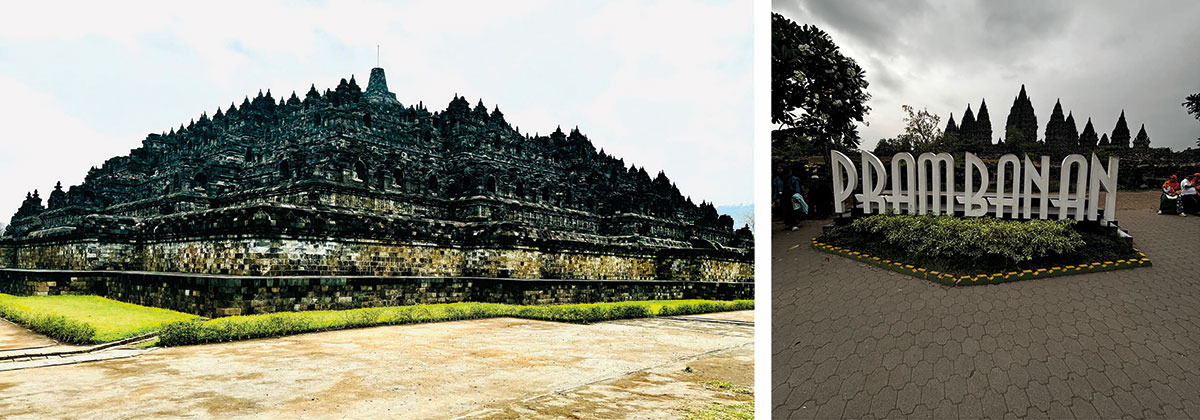
To do both temples in one day is an eight-hour day but well worth the experience, even though it was more expensive than usual (budget £90 for the day with driver and entrance fees).
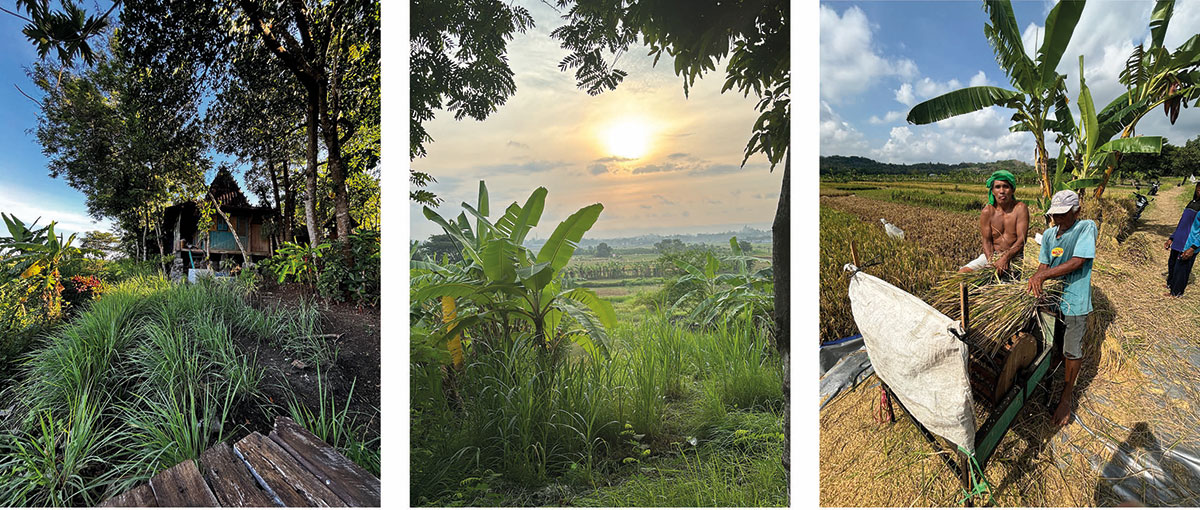
My other reason for being here was to visit a four-day yoga and meditation retreat south of Jokja called Joglo Gumuk. I’m not a yoga person particularly but my girlfriend suggested it would be good for me. I didn’t realise the yoga would be quite as tough, but then I’m not particularly flexible. It was like a jungle retreat at a lovely wooden house with veranda overlooking rice fields – with all manner of critters and geckos for company! There are three wooden huts for guests so it was very quiet.
I was looked after the moment I arrived, with classes for local herbal drink-making (jamu), puppetry at a local factory (wayang) and making Urap – a kind of salad with a lovely rolade. We had five yoga classes and two massages, so my time was pretty well used up. In between, I took walks into the rice fields and took the opportunity to say hello to all the friendly happy people working in them.
Overall I would highly recommend this pit stop on your travels through Java. I felt refreshed, healthy – and a bit more bendy!
The main railway station of Yogyakarta (Togu) is easily reached by Grab taxi. I asked my hotel to organise the Kai railway ticket to Surabaya (East Java) which takes four hours and costs around £15 for executive class on this train. There is a choice of executive and economy – it’s a small price difference but the seats in executive are very comfortable with phone charging points and lots of leg room. Once I had my online ticket I found it very straightforward at the station, plus the announcements are in English as well as Indonesian.
The journey is about as good as it can be. There is a dining car to sit, eat and chat with strangers in, while away the time or just take in the lush scenery. It seems very well organised and all the staff have uniforms and take their role seriously. I chatted to a couple of fisherman from an island east of Bali (Flores) who speak some English and the only other Englishman on the train (John from Wigan) joined us. The fishermen support Liverpool Football Club as does John, so common ground was found quickly!
YOU MIGHT ALSO LIKE: Tunbridge Wells to Sicily, via Slovenia by Interail
Surabaya is Java’s second biggest city and the capital of East Java. It has been one of Asia’s busiest trading city ports due to its location and played an important role in encouraging support for Indonesian independence during the country’s national revolution.
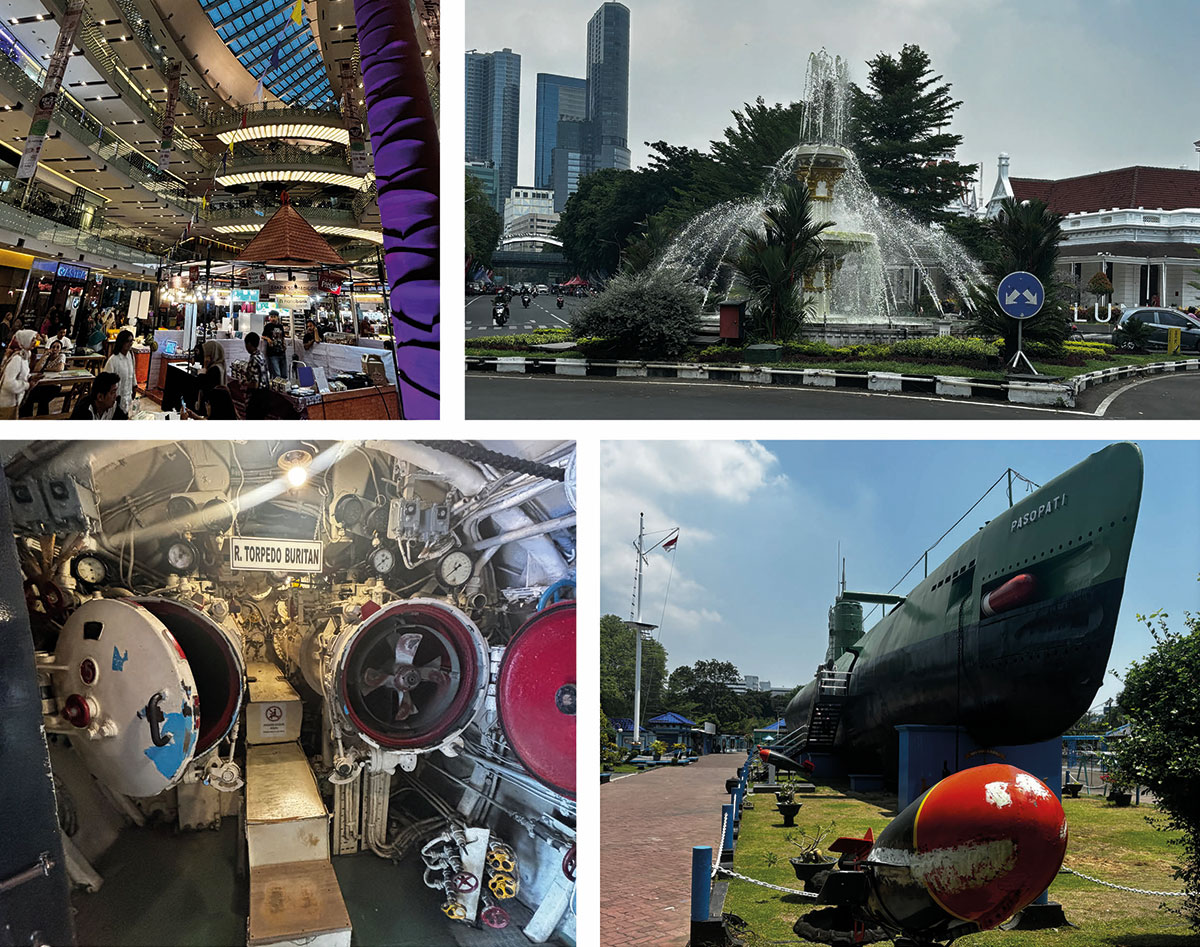
It’s a bustling metropolis, bypassed by many tourists, but well known as a centre for fabulous street food. Although I was on a short stopover, I visited the famous Grand city mall near my hotel and gingerly tried some dishes from the hundreds of street food stands in the food hall, including Nasi Goreng, Nasi Babet and Nasi Memek and found that all were delicious and quite spicy. I was literally the only tourist in the entire mall, so I got a lot of attention and made some new Indonesian friends.
To my mind, if tourists are avoiding a city in Java it might be a good reason to go there. There seem to be very few Westerners in Java generally but as I headed towards Bali the numbers started to build, especially around the big sites like Borobudur and Mount Bromo. I find as I am travelling alone the fewer Westerners the better, as it means I get more attention!
Another top place to visit in Surabaya is to pop along to see a Russian-made submarine in a dry dock very close to the railway station. It was my first time inside a submarine and well worth doing. There are some small holes to climb though for which I think the recent yoga helped!
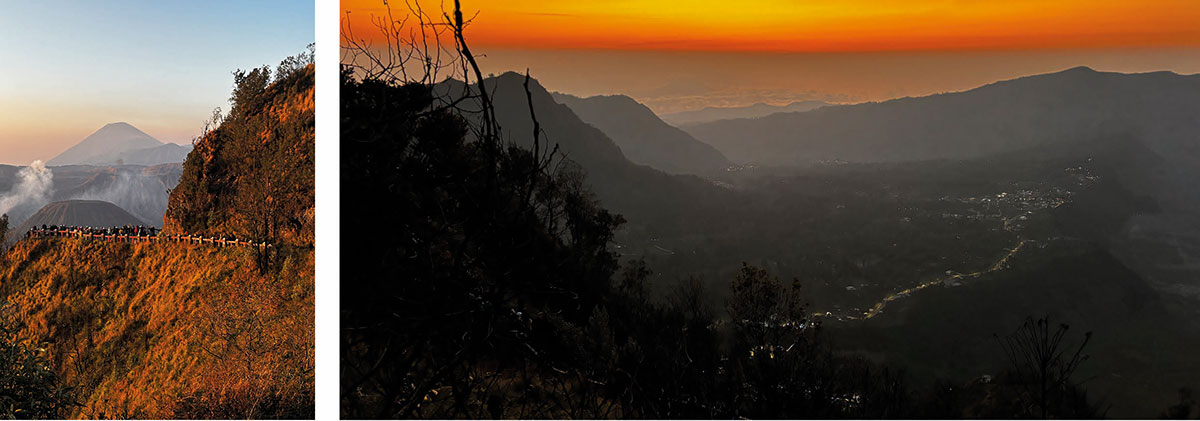
Another must-do trip in East Java is to Mount Bromo – so I took the train for two hours east to Probolinggo (the nearest spot to Bromo) to wake at 1.30am and see the sunrise. It was well worth the trip, but a lot of time was spent in traffic jams of jeeps heading up to the volcano’s viewing spots. But the reward was a spectacular sunrise and view of Mount Bromo.
My final leg of this Java train odyssey was Probolinggo to Banyuwangi – the most Easterley point of Java and the ferry port to Bali. The journey takes four hours through more tropical-looking countryside and goes alongside Mount Gunung Raung.
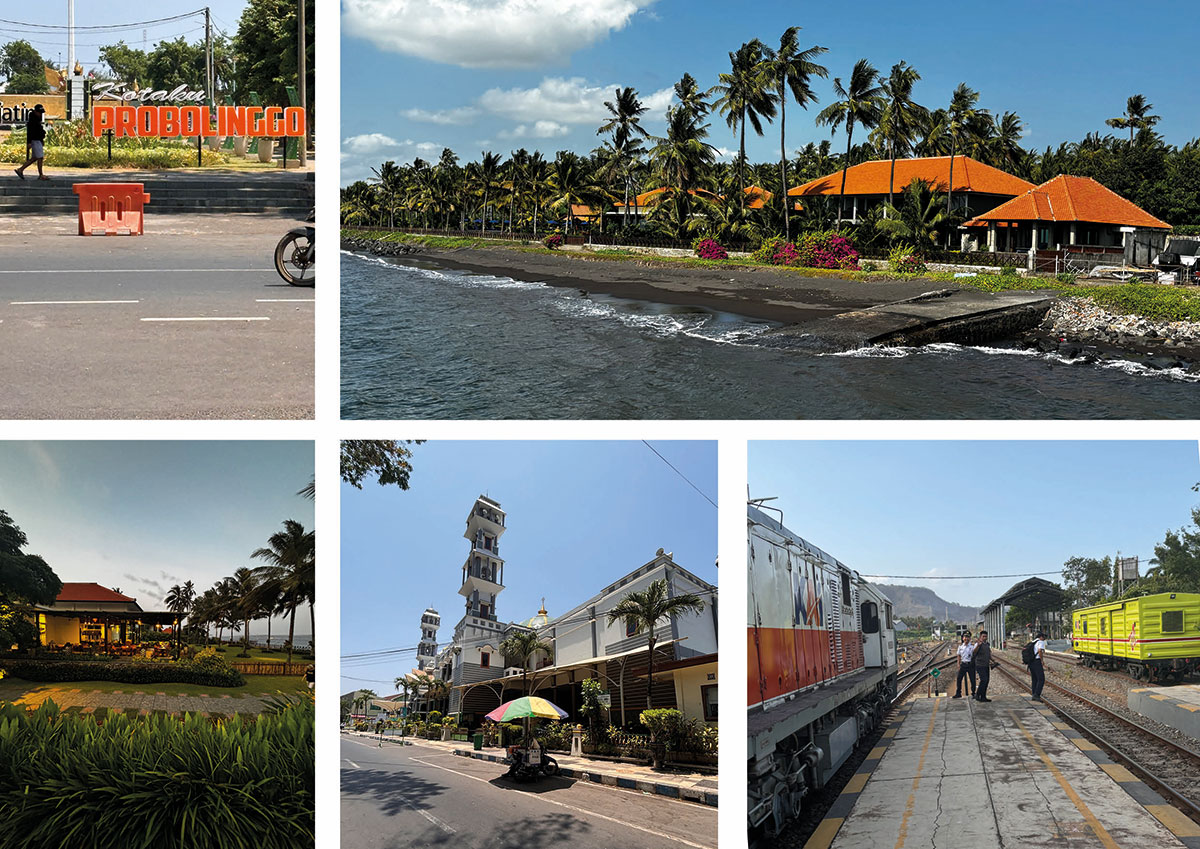
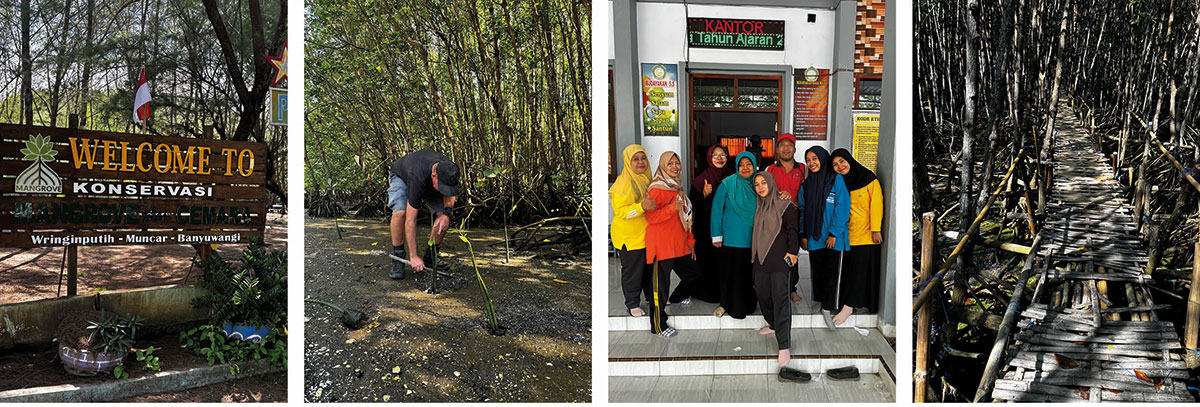
We arrived at my final destination Banyuwangi where I stayed at the wonderful Teluk Biru Homestay just north of Alas Purwo National Park in the south. My host Ali, who teaches English at a local school, took me to the school to meet the pupils where I was treated like a celebrity – this was probably my most special experience so far!
We also visited his Mangrove forest replanting sustainability programme. Mangroves are a natural way to protect the land from sea surges and Tsunamis. Some 78,000 seedlings have been planted since 1990 in Pangpang Bay as a local environmental project. Mangrove forests also protect marine life and provide raw wood materials. It's a fully natural and sustainable way to protect the land and the sea areas of East Java and is the only project of its kind in the whole of Indonesia.
I loved every minute of Java – the people, the buzz of the cities, the efficient trains and the outstanding beauty of this off-the-beaten-track country.
Top recommendations
- The Stanley Wahid hotel in Jakarta (booking.com) as it was clean and central
- Download the GRAB app which is great for taxis and easy to use
- To book trains use the Kai trains website
- The Phoenix Hotel in Yogyakarta, offering a luxury stay
- Or Ceria Hotel in south Yogyakarta – a good price, clean and a good location
- Teluk Biru Homestay in Muncar Banyuwangi.
- Ketapang Indah Hotel in Banyuwangi – for some great 4star r and r
-
I booked the hotels through booking.com and I travelled mainly with Grab taxis
#VisitIndonesia #RailTravel #TravelInspiration #IndexDigital