





Tunbridge Wells to Sicily, via Slovenia by Interail
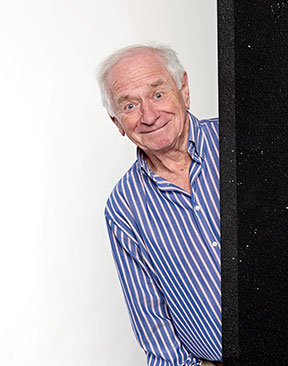
Here Stephen, publisher of Index Digital and part-time traveller, takes an Interrail trip from London to Sicily via Slovenia and back to the UK via Rome all by train.
The thing with independent travel when one is slightly older is the ability to be slightly neurotic around all things travel – whether it's checking for my passport all the time or being at train stations incredibly early in the anticipation of missing one! It’s not something I used to do, so I can only put this down to age.
However, to stretch one’s boundaries in this area is very good for you and I feel a lot less anxious around travel since retuning from the Dominican Republic in one piece – despite several mishaps which you may have read about in my last article!
So my lovely Interrail pass (15 days’ travel throughout Europe over two months) has got me to London St Pancras and then on to Paris for an overnight stay and the chance to wander around the city. Once there, I walked from Gare du Nord to the Louvre, which took me about 40 minutes.
Around the two train stations it's quite rough and ready (especially at night), but as you get closer to central Paris and the Louvre the architecture and atmosphere feels very much like the Paris you would expect. The Louvre is the most visited museum in the world, housing the Mona Lisa as well as 80,000 other museum artefacts. If I was here longer I would have chosen a bicycle tour around the city as it is very flat, and definitely a visit to the Louvre. I love the Paris cafe vibe and listening to the flowing French chats – even though I had no idea what they were saying!
Walking around I was nearly run over many times with the confusion over right hand drive and what’s coming from where! Care is definitely needed!

During my train journey on to Munich, the landscape was largely flat and due to it being winter and quite grey I took it as a good chance to catch up on reading and sleeping. The trip from Paris to Munich takes around five hours with a quick change at Stuttgart. Journeys are very easy to plan and book with the Interail App which I dowloaded – and maps.me is great for finding everywhere off line.
Munich, the capital of Bavaria and Germany’s third largest city, has many centuries-old buildings (some quite new looking due to the bombing in the second world war) and many great museums, castles and of course the infamous concentration camp town of Dachau nearby.
I did manage a solo bike tour round Munich. Unfortunately March is not their busy season for group rides which I would have preferred with the benefit of local knowledge. The navigation and general ride was very easy and the city is flat and well laid out for bikes with lots of great bike paths and clear signs.
My bike ride took in the Munich Beer Festival area (Oktoberfest – a large car park at the moment!), and the vast Nymphenburg Palace, built in 1664 for the heir to the throne Elector Max Emanuel of Bavaria.
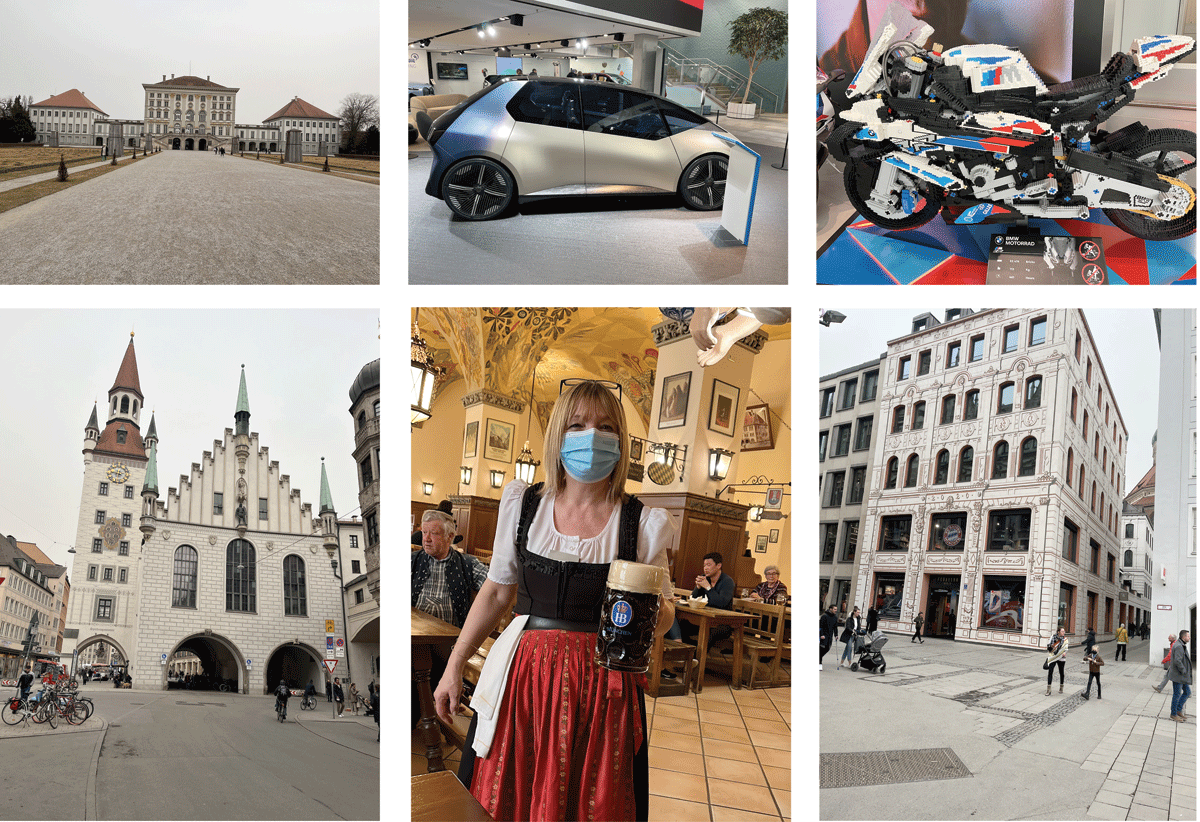
The palace was mainly used by Bavarian rulers over the centuries as a summer residence. My ride also took in The Olympiapark, BMW head office museum and very impressive showroom.
Then there was the English gardens along the river and lastly the famous Hofbrãuhaus München Beer Hall for a very large pint of German beer that rendered the end of my riding abilities for the day – so the bike went back!
The following morning I made my way to the train station for my early train to Zagreb, Croatia, which takes around eight hours. Booking and staying in hotels is incredibly easy nowadays but sometimes a bit soulless, so I decided to attempt a hostel in Zagreb or maybe even a dormitory mainly for the purpose of meeting other travellers that are hopefully not all 40 years younger than me!
Looking at booking.com it seemed dormitories for the older traveller are not that common so I opted for single room at the Swanky Mint Hostel near the centre of the city, which was a fun place and very sociable.
Zagreb is the capital of Croatia, lying along the Sava river and by the slopes of the Medvednica mountain. Highlights for me were the Festival of Light, which was on for the weekend, and also breakfast at the historic luxury Esplanade Hotel.
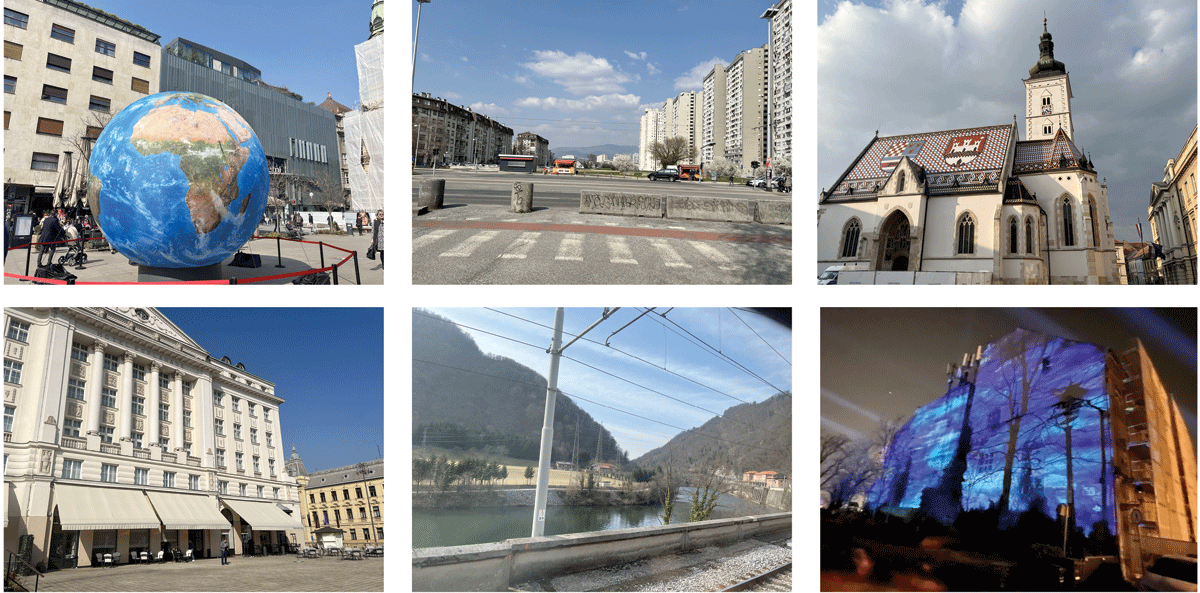
Famous as the Orient Express Hotel it is visited by many royals and celebrities. It offered a bit of opulence, which was great, as well as a superb breakfast.
The train trip from Zagreb to Ljubljana was a stunning three-hour journey along the river and mountains of Slovenia, punctuated by a 1/2-hour police check stop (due to Schengen and Serbia). This was an old style train with the separate compartments of six and always great for conversations and the feeling of how travel by train should be.
Ljubljana, the capital of Slovenia, is much quieter than Zagreb – although it is out of tourist season. This is a very beautiful and small city with the Ljubljanica (Sava) river meandering though the middle of it which is lined by cafe society. Centre piece is Ljubljana Castle.
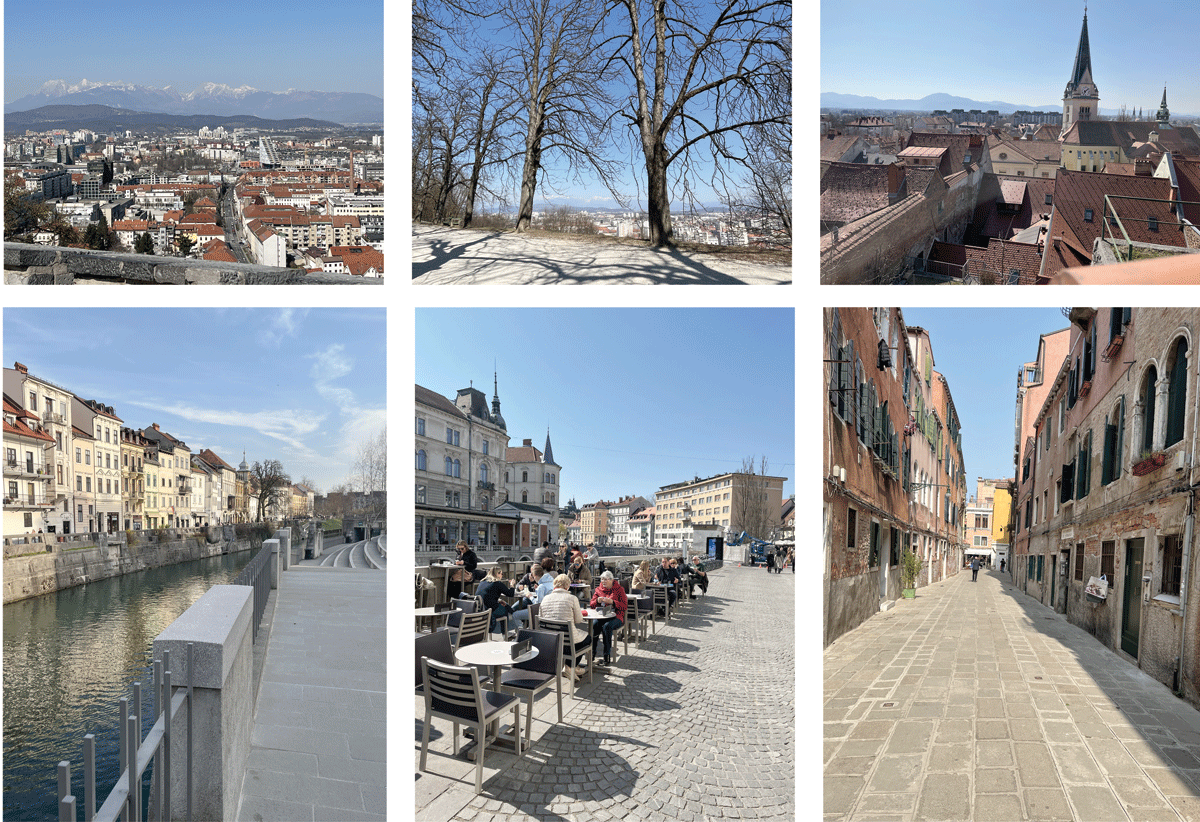
Built in the 11th century to ward off unwelcome visitors it is now used as a cultural venue and a way to see the city and the surrounding snow-capped mountains from high above.
I decided to head further into Slovenia, especially as people I met kept mentioning Lake Bled in northern Slovenia, and on arrival it immediately struck me as a beautiful place, the most serene lake, surrounded by snow-capped mountains and an island with a church (the home of Mary pilgrimage) in the middle. A must-visit destination (in spring or autumn – as in summer it is probably very busy).
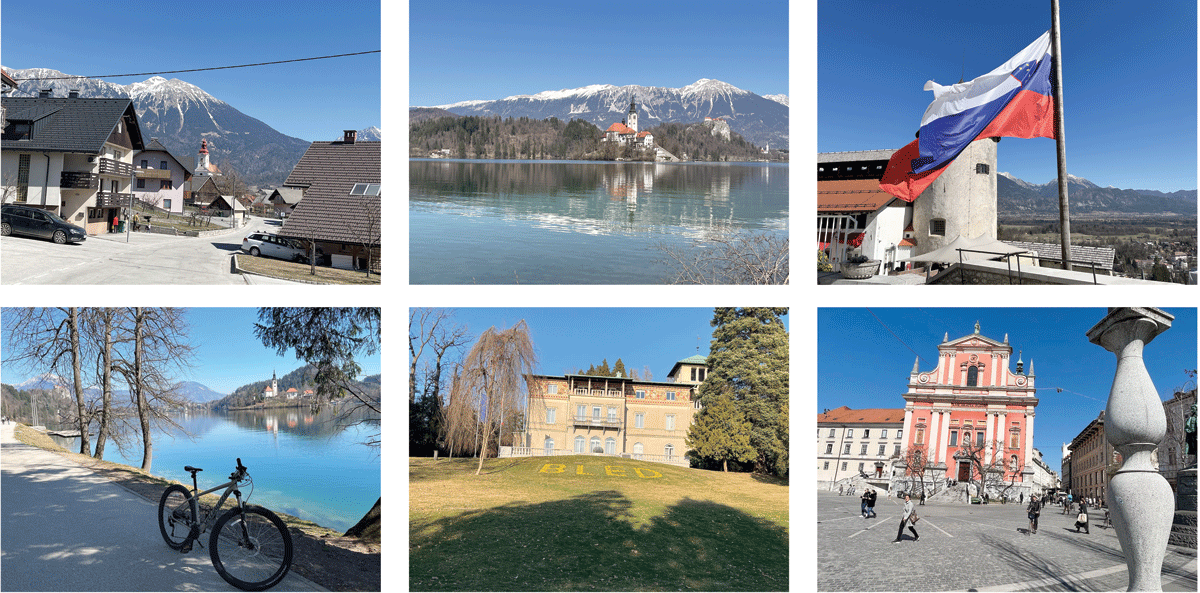
First established around 600AD it soon came under Bavarian influence and was run by various German bishops, finally coming under the control of Yugoslavia in 1918 (and you can see communist influence in some rather ugly buildings in the tiny town). Lake Bled is now a part of Slovenia and the most visited tourist place in the whole of the country. Aristocracy from around the world have visited Lake Bled for its health-giving properties from the early 19th century.
YOU MIGHT ALSO LIKE: Travel blog
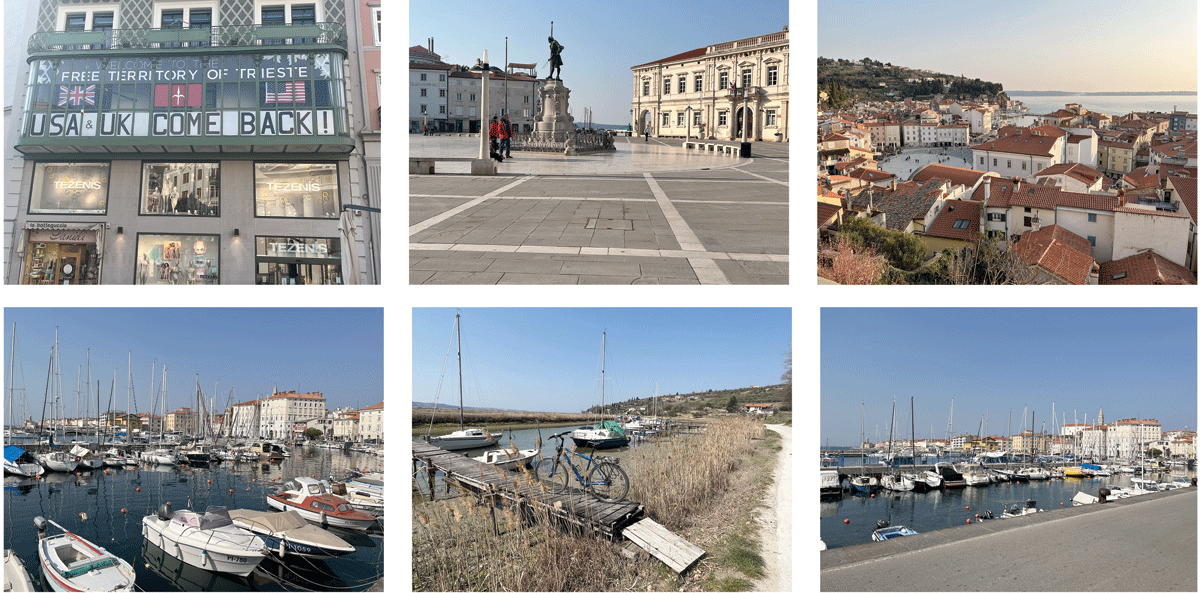
My final Slovenian destination was to visit to the coastal town of Piran, in the gulf of Piran on the Adriatic. I got a train from Bled to Trieste, Italy and then a bus to Piran and no border checks were needed. Piran – as you can see from the pictures below – is a stunning seaside town and the main resort for Slovenia – the coastline only being 35 kilometres in length. The town is centred around Tartini Square which is named after the violinist Giuseppe Tartini who was born there. Piran is known for its medieval architecture, tiny cobbled streets and beautiful vistas. Well worth a visit – as is the whole of Slovenia!
Next up I decided to head through Italy, travelling south to Sicily before making my way back home.
Trieste was the starting point for travels down through Italy to Palermo in northern Sicily. Nestled at the top of the Adriatic Sea and surrounded by Slovenia, Trieste is a mixture of Italian, Slovenian, Croatian and Greek history and has its own unique border town culture. It has some amazing neoclassical architecture, huge, impressive buildings and, of course, with the blue Adriatic on its shores there is so much to see. Trieste offers a very laid-back city vibe and is well worth a two to three day visit.

One of ghe highlights is walking around the city and enjoying the buildings, as well as the cafe society feel and there are lots of great restaurants to enjoy delicious meals.
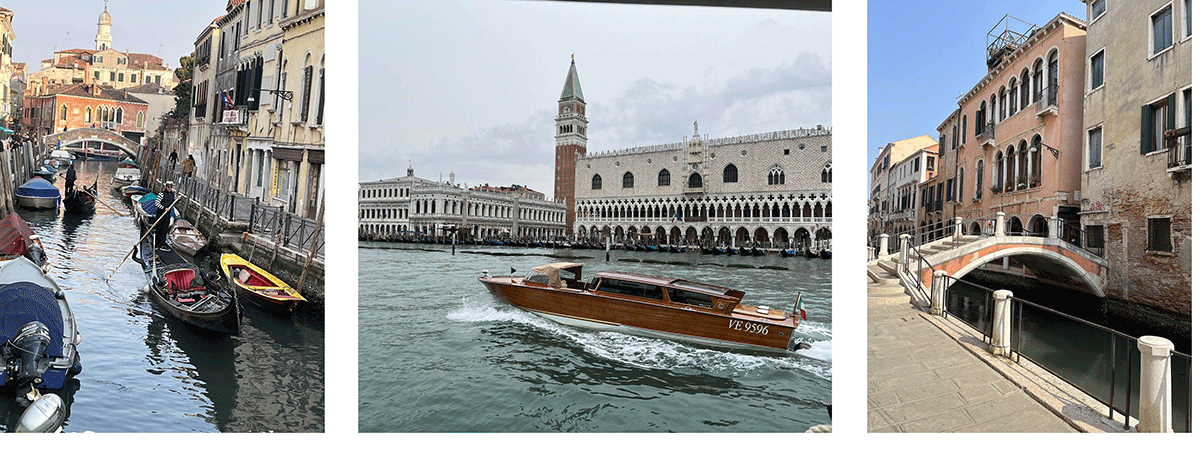
Next stop Venice. The train from Trieste to Venice takes about two-and-a-half hours along the northern shores of the Adriatic Sea. Having arrived in Venice, as soon as you walk out of the station you are struck by the insane beauty of the place – beautiful buildings, waterways right in front of the station, buzzing people, water ferries and gondolas everywhere!
Venice is the capital of Northern Italy’s Veneto region and was described by the New York Times as the most “beautiful man-made city in the world”. It has around 100 islands and no roads – just canals including the grand canal thoroughfare lined with renaissance and gothic palaces. The highlight of Venice for me was buying a 24-hour pass for the ferries (costing 21 Euros) around the circular Grand Canal and surrounding island of Murano (famous for glassmaking and full of glass shops).
Join us for great weekly offers, discounts and local stories
Spending two to three days wandering around the smaller canals and cobbled streets inside the Grand Canal is an amazing experience, with awe-inspiring scenes around every corner. Building after building inspires wonderment – although the bustle of tourists makes it slow progress. There's street food and fabulous restaurants on every corner – not to mention all of the cafes! However, I imagine you may want to stay well away in the middle of summer when it is hot and packed with tourists.
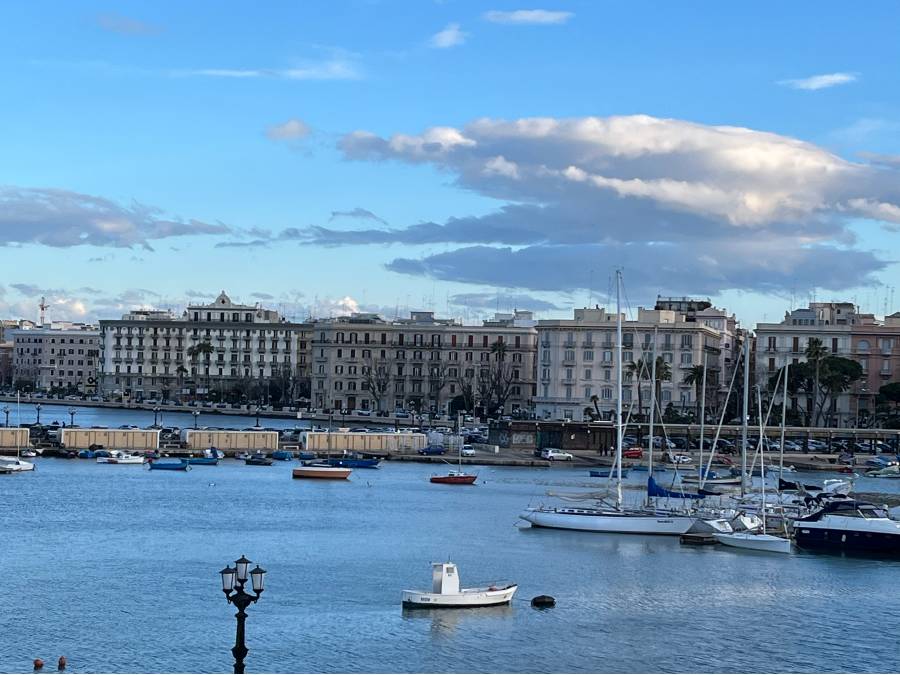
Having checked the weather I decided to take the train to Southern Italy in one go (taking seven hours) getting off at Bari – a port city located in the south of Italy and the capital of Puglia. Most people only visit Bari as a way to access the ferry to Greece and Albania, but it is in fact a good place to stop for a few days as it has a bustling old town, great shopping and it is the place famous for watching the ladies make orecchiette pasta (food for the poor) in the street and the panzerotti, deep fried pastries stuffed with cheese and tomatoes.
Also, worth a visit is Alberobello, a medieval village nearby, and Putignano which offers a real Italian feel with few tourists and a very different old town with mostly residents and few gift shops and restaurants – you will find most of these around the outside of the old town.

As I was on a deadline to get to Palermo in Sicily there was no time for hanging around. Next stop on the train after a 10-hour trip (five changes including ferry to Sicily!) was the quaint town of Taormina on the east coast of Sicily. The railway station is by the beach but the town itself is perched 240 metres above – or 900 steps as I discovered! It’s a very beautiful place with stunning views of the Adriatic Sea on one side and Mount Etna on the other. It's quite touristy but also incredibly scenic and known as the prettiest town on Sicily, so well worth a good few days' visit.
I wasn’t planning on stopping in Catania, an ancient port city on Sicily’s east coast that sits at the base of Mount Etna, as I only went there as a way to visit the volcano, but immediately on arriving (after a 20-minute walk from the station) I was struck by how different it feels to the rest of the cities I have visited. The buildings are partially constructed of volcanic stone from the various Etna eruptions over the centuries, so have a dark appearance to the facades. There have been eight major eruptions in all and thousands of small ones – even one in February of this year.
Stand-out aspects for me were the prominent Baroque Cathedral of Sant'Agata in the central square, Piazza del Duomo, and the Monastero Dei Benedettini di San Nicolo L’Arena which was a former Benedictine Monastery and is now a university for the humanities.
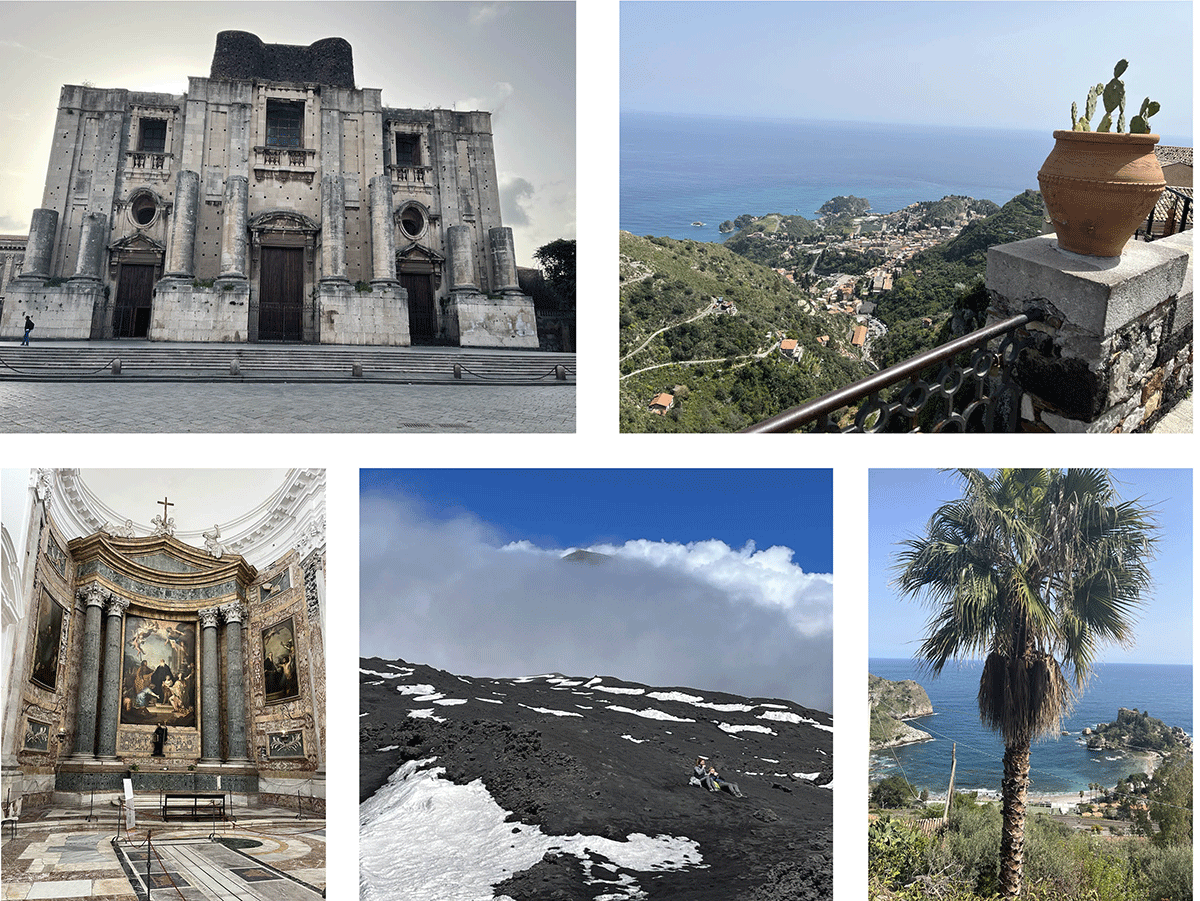
Of course, a visit to Catania would not be complete without an organised tour to Mount Etna, heading 2,750 metres above sea level and also visiting a vineyard at the base that produces all volcanic and red and white wine and some tasty products based on the mineral-rich soil of the volcano.
In 2021 Etna erupted so much that the overall height of the volcano grew by more than 100 feet! The activity and the religious feelings of the city of Catania seem to revolve a lot around Etna as the goddess of the city known as such due to its incredible beauty and live volcanic activity.
Moving on again, traveling from Catania to Palermo took five hours by a very scenic train right across the interior of Sicily. Palm Sunday was a great day to arrive in Palermo. Commemorating the day Jesus rode into Jerusalem on a donkey and palms were placed before him, in Palermo large and small palm branches are seen carried and sold everywhere on this day as Palermo is a deeply religious city with many churches and cathedrals.
Palermo is a city of massive historical influence, architectural contrasts and gastronomy famous around the world. The capital of Sicily is also famous for its neoclassical architecture and Byzantine mosaics, Mafia origins and four superb markets that put our UK supermarkets to shame.
YOU MIGHT ALSO LIKE: Bodrum: ‘The Land Of The Eternal Blue’
The history of Palermo goes back 2,700 years and has been influenced by Roman, Spanish, Greek and Arabic cultures over the centuries. Roman Catholicism is highly important in Palmerian culture, and this can be seen in the many churches and symbols all over the city.
After sampling the delicious street food of Palermo and the excitement and buzz of Mercato Bollaro (market), a great way to while away a few hours is to people-watch with a coffee from one of the many historical squares. While the buildings exhibit a shabby chic, a takeaway from Palermo is how stylishly the Italian people dress.
Highlights for me were The Cathedral of Palermo, the statue of immaculate conception, Bollaro Market, so many incredible buildings and the anti-Mafia museum which supports the anti-Mafia uprisings of the 1990s by the people of Sicily fed up with the Mafia control and brutal murders of judges and their guards.
I stayed in Palermo for five days with one very interesting bus trip to Mondello Beach. It seems the trains are very easy to use, but the buses are very confusing to begin with – other tourists on our bus were fined 50 Euros for buying a ticket correctly but not getting it stamped on the bus. A packed bus and arguments about tickets with grumpy ticket inspectors does make it a more interesting journey! However, it was worth the 11km trip – Mondello is a fabulous white sand beach lined with restaurants and bars with stunning shades of azure blue waters.

Every hotel and guest house in Italy seems to have a bidet and toilet next to each other. On at least one occasion I accidently went to the toilet in the bidet and only realised my mistake when I flushed the toilet!
I needed to get a fairly quick train back to the UK, so my last Italian stop was Lake Como on the border of Italy and Switzerland. While it is famous for lots of things, more recently it has become known as the Italian home of George Clooney – which at least three locals mentioned in my very short stay! Apparently he is seen regularly on his scooter around town (before the dreaded Covid) and is well regarded in the area for his approachability and lack of star superiority.
From Lake Como I took a train all the way across Switzerland, enjoying the beauty of the mountains, lakes and spring greens of the trees. Then it was one stop from Basel on the Swiss/French border across the fairly flat French countryside to Paris at 340 kilometres per hour!
Although Paris was a quick overnight stay, I was recommended to try the Bouillon Julien restaurant at 16 rue du Faubourg Saint-Denis in northern Paris, which was an absolute delight (it was built for the poor but taken by the bourgeoisie) and it made me feel that there is so much more to see in this city alone. Maybe I didn’t research enough – I relied on word of mouth, but often that's the best way.
The main takeaways for me on this 4,500-mile interail train journey were the incredible friendliness and humour of the people everywhere, the Italian churches and religiousness, the ease of travelling by train, the beauty of Slovenia by train, the great food and how little and how much I discovered over so many miles (5,000 altogether).
Travel is a many headed beast of beauty, discovery, meeting new cultures and people and the challenge of when to speed up and when to slow down – who will ever know the true answer!!
Some travel tips
- Interrail travel is easy-peasy: go to interrail.eu/en and choose a plan that works for you. I chose 15 days within two months. Some reservations were needed on the way but it is all very straight forward and out of main tourist season it is fine to plan as you go. Most trains are walk-on walk-off except Eurostar (call first to reserve) and the European high speed trains, but it can all be managed from the Interail App.
- Again I tended to use booking.com and booked my accommodation the day of the stay once I was on the train. This may not be as easy in the summer months, but there is lots of availability, especially now as there are not that many tourists.
- The best time to go to the areas I visited are spring and autumn.
- Take a pair of good walking shoes and carry as little as possible – a rucksack is probably your best option.
- A money belt is also a good idea, especially while on the move.
- For the bus buy your ticket at a Tabacchi (normally near the bus stops) and make sure you insert in the stamp machine when on the bus to avoid a potential fine.
- Bike hire is great in Palermo, Bari and Mondello as the areas are quite flat. There are also free and paid walking tours which are a good way to learn about each place.
- Try to speak some Italian words it's always fun and the locals like it when you try. I would suggest the app Duo Lingo for learning.
- Do the anti-Mafia tour in Palermo and visit Catania if you can.
- Do download maps.me on your phone its invaluable for getting about without needing Wi-Fi or using phone data.
The Interrail ticket is pretty simple to buy, just go to Interrail online and you can choose from a number of options. For this trip I chose the global pass (all of Europe) for two months with 15 days' travel allowed. The price is around £450 which seems very good value. The only thing to bear in mind is sometimes there are supplements required for fast trains or busy routes, including the Eurostar at £25ish to reserve a seat.
Regrets...
a) Packing too many clothes.
b) Maybe missing a couple of opportunities I should have taken to travel with others.
c) Not making Istanbul (next time!).
#EuropeanTravel #TravelInspiration #IndexDigital