




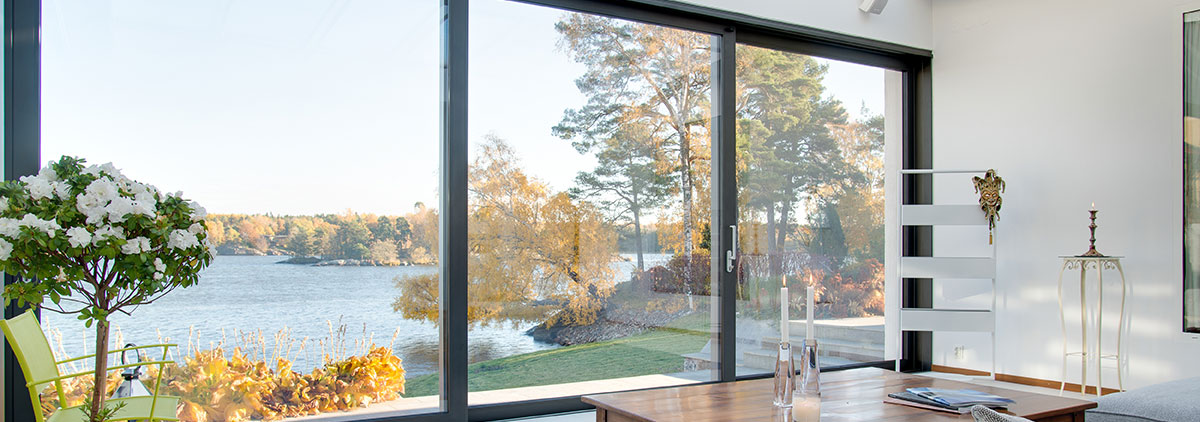
Top Tips To Make Your Conservatory More Attractive
Recently property website Right Move has released a report that claims that conservatories can knock up to £15,000 off the value of a house.
There are increasing concerns amongst house buyers about how uncomfortable they are in the summer and the winter and how inefficient they are. There’s also a feeling that they’re starting to look dated or ‘naff’.
But there are a lot of conservatories out there: by the end of the 2000s, close to one in five homes had a conservatory, according to figures from the Department of Energy and Climate Change.

So, what do Homebuilding & Renovating Show experts, architect Paul Testa and interior designer, Julia Kendell suggest? Paul Testa gets down to the nuts and bolts first:
What is a conservatory?
A conservatory is a primarily glazed extension to a home. It typically has a low brick plinth, but everything above this is glazed, including the roof. They became popular in the 1990s as a way of creating a better connection with the garden and increasing your home’s floor space with a lower build cost than a full extension. In mild weather, they can be very pleasant places to spend time.
They’re typically a product that you buy and have installed rather than a 100% bespoke piece of building. This keeps their cost lower but often means they can be a compromise in lots of situations.
What are the downsides?
The main problem with a conservatory is also its reason for being. Glazed walls and roof mean that the envelope of a conservatory isn’t very good at retaining heat so they get very cold in the winter. Secondly, the glazing lets in lost of solar gain in the summer, so they become uncomfortable throughout much of the summer season.
Their inefficiency is recognised in building regulations and has been for a number of years. They must have a separately controllable heating system and an insulated door between them and the rest of the house. They would otherwise suck heat out of your home in the winter.
In a world where the climate emergency is becoming more pressing by the day, I’m not sure that building structures that fail to be comfortable year-round without huge inputs of heating or cooling energy are a good idea.
Are they “naff”?
I find a conservatory a hard thing to love. They are, almost without fail, built from mass produced uPVC. They’re typically faux Victorian in style with a little finial on the apex and with rounded ogee framing profiles. They’re not built with energy efficiency in mind as it’s so difficult to make an all-glazed structure properly comfortable.
As they are off-the-shelf products that need minimal intervention from planning and building control, they have very little consideration of design, setting and context. This makes them cheap, but a real challenge when I’m so used to the time and consideration a well composed rear extension requires.
It doesn’t surprise me that, as design has become a more mainstream interest, they have become less fashionable. There’s probably a reason that the more fashionable aluminum glazing manufacturers haven’t jumped on the conservatory bandwagon.
What can I do with my conservatory to make it more efficient?
Fundamentally, these are poor performing structures. Anything you do to improve them needs to be seen in this context; they’re never going to be brilliant when starting from this baseline.
The obvious place to make a change is to the roof. This is where a big chunk of the heat is lost and also the main source of summer overheating. The primary structure holding up the roof of a conservatory is its glazing system. This means you have to be careful when changing the roof and a traditional timber framed roof may be too heavy. There are now a huge range of proprietary “upgrade” systems on the market that offer a lightweight solid roof conversion for conservatory structures.
“Perfect fit” type blinds fit very tightly to the window frames. Choosing an insulating or reflective blind fitted snug up against the glass can help to improve both winter heat retention and reduce summer overheating.
If you want to make a much more substantial performance improvement, it’s hard to get away from the need to replace the whole thing. In most cases, but not all, you may be able to keep the foundations of the conservatory and build a more substantial structure on top of these. You’re still looking at £1,500/m2+ to build something, but at least the groundwork is done. If you’re considering this option, get a structural engineer involved as soon as possible to check if retaining the foundations is viable.
If you do the replacement well, it should be a thermal benefit to the whole house. It shouldn’t lose you the visual link to the garden that was the best bit about the conservatory. It will allow you to remove the external door between it and the house, bringing that connection more into the heart of the home. An architect will be invaluable in making sure you make the most out of this process.
Depending on size and proximity to neighbours, the extension may need planning permission. It will certainly need building regulations approval so get some professional advice before you start to knock your conservatory down.
YOU MIGHT ALSO LIKE: Budget-Friendly Jobs To Increase Offers On Your Home Over Spring
So, if you want to keep your conservatory, can you make it more attractive?
Homebuilding & Renovating Show architect Paul Testa:
In many ways, this is much harder to do. The aesthetic of a conservatory is pretty fixed; it’s not easy to over-clad them, for example. One simple option is to get the frames resprayed a fresh colour by a uPVC frame spraying specialist. This can make it feel much more modern and you could freshen up the windows on the whole house at the same time. Try to think about colours that aren’t the default anthracite grey to give your house some individual character. You shouldn’t need permission for this unless you’re in a conservation area or the house is listed.
Homebuilding & Renovating Show interior designer Julia Kendell:
1990s conservatories are outdated and often look very tired, but the cost of replacing them with solid construction or an orangery can be prohibitive. Painting the UPVC framing/woodwork to a contemporary greige or black will uplift the look. Softening the flooring by using a coir or similar carpet (be careful to choose a minimal UV fade) can make the space much nicer to inhabit.
Large-scale potted palms and plants and contemporary furniture can do wonders making the conservatory feel more like an orangery than an old people’s sitting area. But that said, rattan furniture is definitely making a come-back. Try some colourful, contemporary cushions and layer with throws for an inviting look.
Plantation shutters, Roman blinds in a stunning fabric, or pretty linen voile blinds are a great way to maintain a steady temperature seasonally and will dramatically improve the appearance of a tired conservatory. Giving the conservatory a new purpose can add life to the space, so consider turning it into a games or crafting room.
Image by wirestock on Freepik
#Homebuilding&RenovatingShow #HowToImproveYourConservatory #IndexDigital


