



Amazing Oman Adventure
By INDEX Digital’s Stephen Gurney.
For those looking for a desert adventure, a city escape, a beach holiday and the chance to soak up some rich culture, then you don’t need to book four different holidays – you can head to Oman on the southeastern coast of the Arabian Peninsula, where you will find all in abundance.
Getting there is simple and convenient: the flight to Oman from Heathrow – a day flight – takes seven hours and comes in at about £500-£600 return (at the time of writing this article), making it good value.
Before heading out there, we asked the tourist board for a contact to link up with in Oman to show us around and we were happily contacted by Said of Al Hudna tours – who were our transport sponsor for our stay, and who also provided us with a very kind tour guide.
On arrival in Oman I found Muscat Airport felt very different to any UK airport experience – it was new, had a calm atmosphere and was spacious and clean with impressive marble flooring throughout. Clearly, a lot of money has been spent to make it the welcoming hub it is.
Said whisked us to our hotel 20 minutes away (the Golden Tulip – an excellent 4-star hotel with a lovely roof top pool overlooking the city) and informed us of our schedule for the next day.
Day 1: Muscat
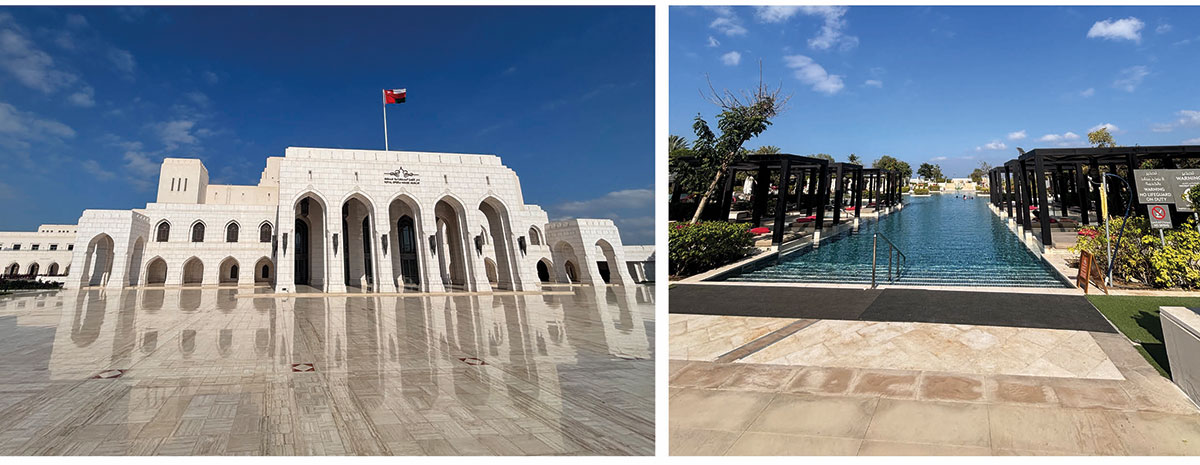
So an early start (jet lag included!) found us at the Sultan Qaboos Grand Mosque, an imposingly beautiful white stone mosque with the six turrets of Islam surrounding it and mighty impressive gardens.

After an architectural competition was held to select the best design for the mosque, construction took six years and was completed in 2001. The mosque’s total capacity is 20,000 worshipers, covering an estimated area of 416,000 square metres. The main square-shaped prayer room can accommodate 6,500 worshipers and has a central dome rising 50 metres above the floor – it is the biggest mosque in the whole of Oman.
Equally impressive is its prayer hall floor which is topped with a single piece of Persian carpet composed of 1,700 million knots which took about 27 months to make in Iran. Using only natural fibre, it covers an area of 4,200 square metres and weighs 21 tons.
Entry to the mosque is free of charge and ladies need to wear a headscarf and have their arms and legs covered. I would say this is probably the number one visit to put on your list when you go to the city.
Just five minutes’ drive away is another new architectural feat – the Royal Opera House Muscat, which was constructed in 2011 and has massively impressive white stone and marble flooring on approach. The design and look is similar to many other Omani public buildings including the mosque, plus it has a very spacious feel and the benefit of beautiful gardens.
It also features a concert theatre hosting many shows from around the world, so I would definitely suggest that you take in a show if you get the chance while you are in Muscat.
With a bold blue and gold façade commanding the heart of Old Muscat, Al Alam Palace is the city’s most striking royal landmark. Commissioned by Sultan Qaboos bin Said and completed in 1972, the ceremonial palace receives foreign dignitaries and hosts state functions. Flanked by the 16th century Portuguese forts of Al-Mirani and Al-Jalali, it blends modern Islamic design with deep Omani heritage, a proud symbol of royal grandeur.
The city itself has a very calm feel, Muscat’s buildings reflect a quiet elegance shaped by desert, sea and tradition. Low-rise white and sand-coloured houses line the streets, their flat roofs and shaded courtyards designed for the heat. Arched windows, carved wooden doors (showing a Zanzibar influence) and delicate latticework add subtle decoration without excess.
Heading out from our hotel we took a walk to have our dinner at one of the local Omani restaurants, where there are curtained booths for families who sit together on the floor and eat with their right hand. We stuck with cutlery this time, but it was lovely to see. It is possible to eat outside incredibly cheaply and the food is generally very good, with a lot of rice and meat (lamb and beef) or fish dishes, with rice being a big part of the Omani diet. Alcohol is generally not available (except in some of the bigger hotels), Omani coffee and Pepsi seem to be favourites here.
Day 2: Nizwa
On our second day, our plan was a two-hour drive to the City of Nizwa and Nizwa Fort. Nizwa lies at the foot of the Hajar Mountains, a former capital where history still shapes daily life. Its bustling souq, date palms and mud-brick houses surround the great Nizwa Fort, whose vast circular tower dominates the skyline. Built in the 17th century, the fort’s labyrinth of stairways, traps and battlements tell of defence and authority, while from the ramparts, wide views stretch across the oasis and mountains beyond.
The souk on the outside of the fort is equally impressive, selling everything including Frankincense (a fragrant, aromatic gum resin harvested from Boswellia trees) creating the wonderful woody perfume Olibanum and other health benefits. The area is quite touristy but offers a good experience, especially the souk at the entrance, the bands playing and children selling donkey rides outside the fort.
I would probably recommend spending a night in Nizwa as it is a great historical city to visit over a little more time rather than making day trips from Muscat.
Also near Nizwa at 3,000 feet above sea level is the ancient town of Misfah al Abriyyin, offering you a glimpse into the history of Oman with its mud brick houses and narrow stone alleyways – built on a steep hill to ward off invaders. The irrigation system dates back 2,000 years and supplies the whole village through a canal system as well to irrigate the terraced fields where they grow mangoes, pomegranate, dates and olives.

An oasis in the desert. I also managed a very uncomfortable donkey ride while I was there sold to us by some entrepreneurial local children!

At the time we were on a whistle stop tour of Oman with Al-Hudna tours but there are some great things to see and do in Muscat outside of the tourist traps. As part of our trip we will return to the city of Muscat at the end, but I would suggest that it’s a great plan to spend at least three days exploring the city.
Day 3: Dolphin spotting
On our third day we decided to see the dolphins. We both loved this trip, based from Al Bustan Harbour in Muscat, and our skipper managed to find many groups of dolphins jumping and chasing the seagulls who were chasing the fish. Said of Al-Hudna can organise all of this for you – so it’s a very easy choice to let Said or one of his many drivers arrange the booking as well as getting you there and back. This trip offered a definite feel good experience – I would suggest you try to go when the sea is smooth and blue though!
Days 4 and 5: Beach Days
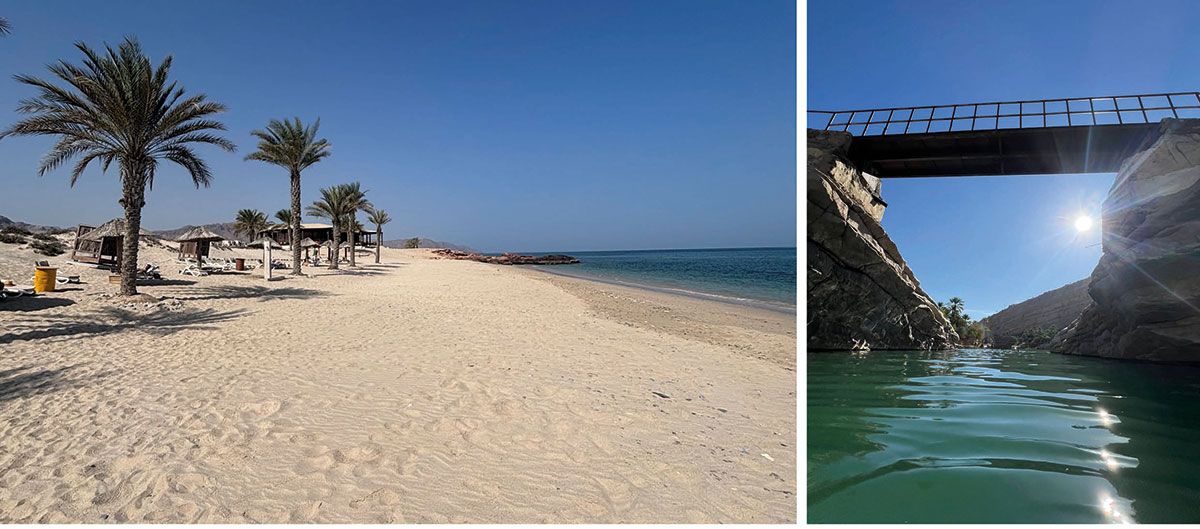
At this point we needed a bit of relaxation time, so Said suggested the Sifawy Hotel 40 minutes outside of the city on the coast within its own vast complex. It was great to relax there for a few days and they had a shuttle to a nearby beach which was absolutely stunning and almost wild.
Day 6: Wadis and a desert night camp
Next up we visited Wadi Shab, about two hours south of Muscat. Often called the Grand Canyon of Oman, it lies at the foot of the Jebel Shams mountain the highest mountain in Oman at 3,000 metres above sea level. A wadi is referred to as a gorge with a riverbed that fills when the rains come. They can have caves, dams, incredible geology and hot springs. Wadi Shab is visited by a quick boat trip across the riverbed and then a 45-60 minute hike along the canyon where you can wonder at the turquoise blue water pools and streams along the riverbed. It is very beautiful and great for swimming in the mountain fresh water. You can also take a fun hike to long clear pools and a cave you can swim inside to find a hidden waterfall. Wadi Shab is probably the number one mentioned wadi in Oman, so it can get busy, but doing it in a relaxed way lets you enjoy the stunningly beautiful surroundings with the majestic cliffs lingering above and beautiful pools to swim in. I would say it is a good idea to arrive early, wear good walking shoes and take swimming gear and towels with you.
We also visited Wadi Bani Khalid about three hours south of Muscat. The second most famous and equally stunning wadi with its Palm tree filled greenery, beautiful warm swimming spots and steep ravines. Again arrive early and wear suitable clothing for swimming, with ladies wearing shorts and a t-shirt over a swim suit.

A night in the desert
I have always wanted to spend a night in the desert and it was definitely worth the wait. We took a camel ride with Said to stay with Mohammed Al Hajri in his desert camp on the outskirts of the town of Bidiyah. The history of Bidiyah dates back to the 8th Hijri century when it was inhabited by the Hadhrami people. Mohammed’s family have a long history with Bidiyah and also own the Bidiyah museum which offers a fascinating insight into Oman’s history in the region and other hotels. Mohammed has a great 5-star hotel in Bidiyah so you could always visit the desert and stay in luxury in a very interesting and traditional desert town.

The desert experience was great – we had a fun camel ride, saw a great sunset among the dunes, had excellent food cooked for us by Mohammed on the barbecue and enjoyed a peaceful night in the desert under the stars. Omanis love to come to the desert especially at the weekend so there are many camps, but if you head further in the real desert, the sands are a fantastic golden, red colour.

Days 7 & 8: Back to Muscat
I would probably recommend at least two days in Muscat to really get to know the city. There is a lot to see and there are some lovely beaches – some of the hotels do allow you to buy a day pass (like the Crowne Plaza and the Shangri-La, both upmarket 4 and 5 star hotel complexes by the beach).
During our trip, we discovered the Al Mouj neighbourhood (the wealthiest area in Muscat) by the airport, which was very different with high value homes, a marina, a beach and a very good outdoor shopping streets, as well as a lovely coffee area. It was great to see local Omanis in traditional dress wandering around socialising in the warm dusk air.
Also great to see are the Indian neighbourhoods, offering a different vibe altogether. The Indian population is the largest Ex Pat population in Oman with 700,000 people. They are well integrated into Omani society and there are many Indian neighbourhoods in Muscat. Outside our hotel, the Royal Tulip, there were lots of shops and restaurants and many IT and phone shops, which were great for wandering around.

Above Images Blue Whale
For those who love snorkelling, a trip to the Daymaniyat Islands is a must. A protected marine nature reserve, it is situated 45 minutes by boat from Al Mouj Marina in Muscat and it is a joy in itself just to ride the calm blue seas in perfect temperatures to get there. Once there it’s possible to see turtles, many different types of fish and lovely beaches, on a trip with Blue Whale tours.

Another key place to visit is Nakhal Fort, situated 63 kilometres from Muscat, which is a really impressive building in the foothills of the Jebel Shams mountain range. Built originally pre-Islam in the 7th Century and fully refurbished in the 17th Century, the fort was mainly occupied by rulers, Imans and their families from pre 7th century to the 1900. It housed many living quarters, dining rooms, meeting rooms and even had a prison. The fort offers panoramic views of the Jebel Shams mountains, the lovely date palm trees and the historical town of Nakhal with its 28,000 inhabitants.
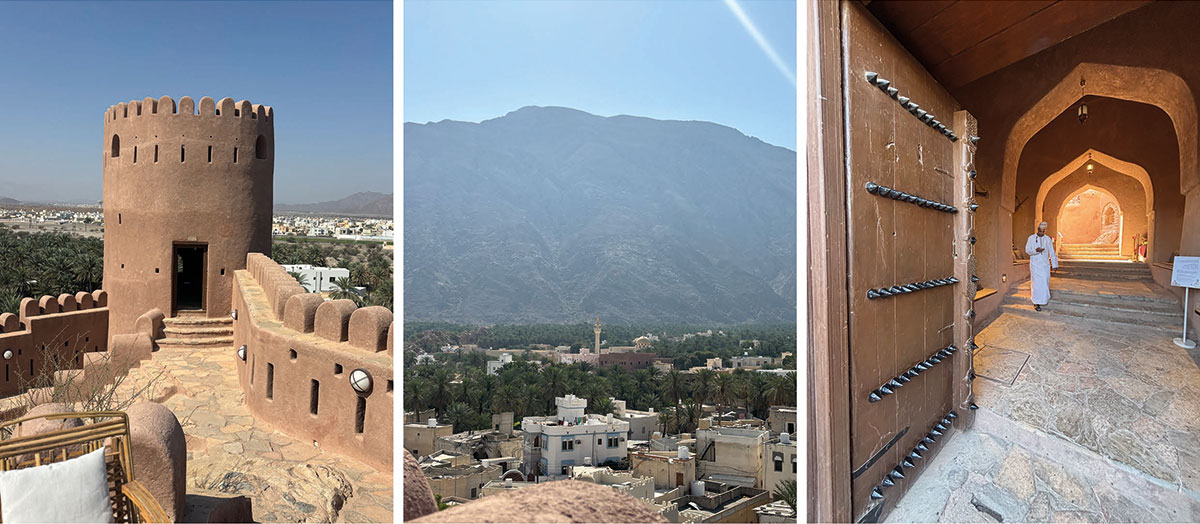
Close to the fort in Nakhal, you will also find Al Thowarah Hot Springs, a popular local picnic and bathing spot worth a visit.
After an amazing eight days we mixed seeing the sites of Oman with some beach time and great insights into Omani country, culture and society. The people are genuinely very gentle and friendly and it’s a very safe as a country to visit.
Next, my adventures will be around Zanzibar in Tanzania, which used to be the capital of Oman, and there are very strong links between the two countries dating back six centuries.

Oman Package Plan
Here is a suggested package idea between INDEX Digital and Al Hudna Tours – contact me if you would like to discuss taking up your own adventure.
- Day 1: Arrive in Muscat around 7pm, meeting your driver at the airport who will whisk you to your chosen hotel where you can spend the evening relaxing.
- Day 2: Have breakfast, then make a morning visit (8.30am) to the Grand Mosque and Al Alam palace, taking in a souq on the way. In the afternoon, relax by the beach or wander around Al Mouj. In the evening, visit the new Royal Opera House around sunset.
- Day 3: Have breakfast at the hotel and then go dolphin watching or snorkelling. Check the weather and discuss with Said.
- Day 4: Head to Nizwa for the night, visiting the Nizwa Fort and ancient town of Misfah al Abriyyin in the day, then spending the evening in Nizwa exploring the city.
- Day 5: Have breakfast and spend the morning relaxing in Nizwa, then at lunchtime head to the desert town of Bidiyah (two hours’ drive) and visit Wadi Bani Khalid for the afternoon. Meet Mohammed for your evening desert experience and a truly stunning sunset. You could either stay in the desert camp or head into Bidiyah to stay at Mohammed’s luxury hotel after sunset.
- Day 6-8: After breakfast, head to Wadi Shab and spend the morning there. You can also take in a sink hole nearby and nearby stunning beaches. In the afternoon, head back to Muscat for a bit more city time before your flight home.
Images Index Digital
#VisitOman #AlHudnaTours #IndexDigital